Author: Anil J

  • Warwick Castle — A Day That Was Never Going to Be Long Enough

    Warwick Castle — A Day That Was Never Going to Be Long Enough

    On Saturday morning, after a breakfast big enough to last the day, my friend Jessie and I caught the X18 bus to spend the day at Warwick Castle in Warwick.. Schools had broken up for the summer the day before, so we knew it would be busy. Our plan was to get there early. When we arrived, the queue was already long, but it was moving.

    We had booked tickets online, which saved both money and time. The bus dropped us opposite Castle Lane, and from there it was a short walk through the car park to the entrance. On either side of the arched entranceway, large maps showed the scale of what lay ahead. This was not going to be a quick visit.

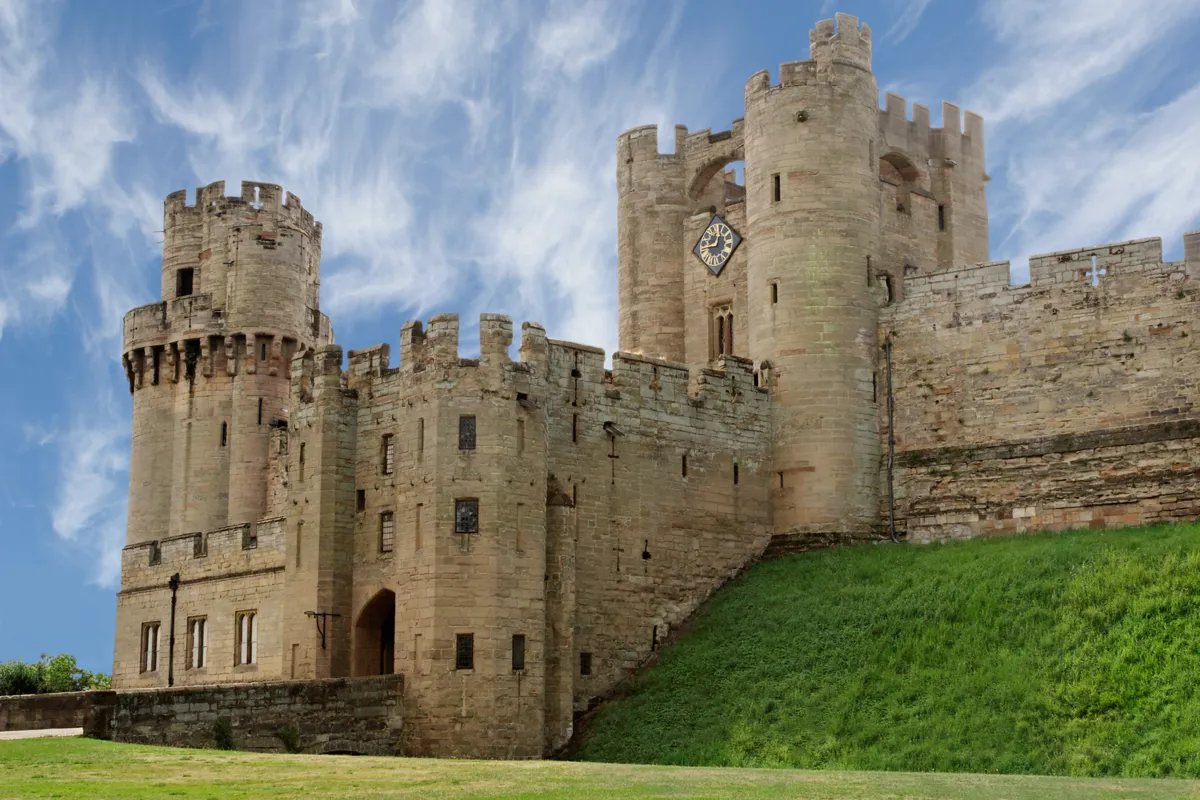
    And it did not disappoint. The circular tower was the first thing I saw, looming high into the sky. A bridge led to the castle entrance, and above the huge doorway there was a clock and a portcullis-style gate. I could immediately picture how it would have been lowered to keep enemies at bay. That is what old castles do to me — they make my imagination fill in what the stone no longer shows.

    Warwick Castle has stood in some form for over a thousand years. It began as an Anglo-Saxon fortification in 914, was rebuilt as a Norman fortress after the Conquest, expanded and fought over through centuries of war, transformed into a grand stately home, and eventually opened to the public in 1978. Walking through it, you feel every one of those layers.

    Inside Warwick Castle

    We made our way up a stone staircase to the Great Hall, which now serves as the armoury. I could have spent an hour in that room alone. The collection was vast — bows and arrows, spears, lances, knives, swords, long shotguns with bayonets. There were early pistols and what I learned was a precursor to a grenade launcher, which apparently had a tendency to blow up in the holder’s hands. That made them unpopular, unsurprisingly, and examples are now rare. Two life-size display horses stood with figures in full suits of armour. I looked at them and tried to imagine the weight of all that metal on a man’s body. Awesome is a word I do not use often, but the armoury earned it.

    From there we moved through the castle’s grand rooms. Each one had something that surprised me. The Cedar Drawing Room, the largest, was originally a ballroom, with panelling from the 1670s. The Green Drawing Room had a ceiling replicated from a Roman temple in Palmyra, Syria — a temple that was destroyed in the 2015 conflict, making this ceiling the only surviving version. That stopped me. A room in an English castle holding the last trace of something ancient from the other side of the world.

    But the detail that caught me most was smaller and quieter. In one of the rooms, there were a couple of Japanese dish bowls, beautifully made, which would have been used for guests to wash their hands. The quality of the workmanship was extraordinary. I stood there looking at them, thinking about the hands that had made them and the hands that had used them, centuries apart. It is always the small things that stay with me.

    The Queen Anne Bedroom held the bed in which Queen Anne is believed to have died in 1714, adorned with red velvet and gold floral silk. It had been gifted to the castle by King George III. The Blue Boudoir, originally a dressing room, had been converted by Daisy Greville, a socialite turned activist, into her private writing room. It also housed waxwork figures of Henry VIII and his six wives. Every room had its own character, its own story, and we spent more time inside than we had planned.

    Eventually we made our way outside. The Time Tower had two rooms showing short films about the castle’s eleven hundred years of history. It was a warm day and the crowds were large, which meant queuing for everything. We stopped for a short lunch break, which turned out to be a mistake — not for me, but for Jessie. He had wanted to see the trebuchet show, and we missed it. Too much time spent inside the castle. I was not sorry about that, but he was.

    There was still plenty to see. The War of the Roses live show was next, and the queue had already started forming a good hour before it began. A long wait on our feet, but it was worth it. When the time came, the crowd surged forward across the bridge to River Island. There was a huge arena with stands on both sides. The show lasted about forty-five minutes and was spectacular — trained actors performing jousting, sword fights, and stunts, with fireworks and speakers describing the history of the conflict. The horsemanship was excellent. It felt less like entertainment and more like a window into something real. The story behind the Wars of the Roses is a history book in itself, and I would rather the reader imagined what it must have been like all those hundreds of years ago than have me try to summarise it here.

    About half an hour after that, the falconry show began — an endangered species display that was both beautiful and sobering. We stayed for it, and then stayed until Warwick Castle its gates.

    By the time we left, we had been there the best part of a full day and it still did not feel long enough. We caught the bus back to Stratford-upon-Avon, had our final meal at the hotel, and packed up for the journey home on Sunday. The train back to Marylebone got us there by mid-afternoon.

    Warwick Castle is one of those places that gives you more than you expect. I went hoping for old stone and a bit of history. What I got was a thousand years of it, a room full of weapons that made me glad I live in this century, a Japanese bowl that made me think about craftsmanship and time, and a live battle that made me feel, just for a moment, what it might have been like to stand on that ground when it actually mattered.

    I would go back. There is more to see. There always is.

  • Stratford-upon-Avon — Visiting Shakespeare Country

    Stratford-upon-Avon — Visiting Shakespeare Country

    On Thursday, 16 July, my friend and I took the train to Stratford-upon-Avon. I had been looking forward to the trip. I enjoy literature, and who has not heard of Shakespeare? But I also had a quiet worry that it might be a damp squib — just a normal town with old buildings, trading only on its famous past.

    We left from Marylebone, changed at Leamington Spa, and arrived at about 3.45 pm. The journey took about two and a half hours with frequent stops, but I do not mind trains. They avoid the traffic, and there is something about watching the countryside pass that settles me.

    We checked into our hotel, which we had deliberately chosen to be close to the town centre, freshened up, and went exploring. Almost everything closed at around 5 pm, so the first evening was mainly about getting the feel of the place and working out how to make the most of Friday.

    My first impression was promising. The town felt compact, walkable, and full of hints that Shakespeare’s presence still shaped the streets around it. I was relieved. This was not a theme park. It felt like a real place that happened to hold an extraordinary history.

    On Friday, after a hearty breakfast, we made our way to the Shakespeare Visitor Centre. You could book tickets there for three attractions linked to Shakespeare. The centre itself had an exhibition — two rooms showing videos with quotes from his works, and displays of the clothing, money, pottery, paintings, and notebooks from his time. The exit led along a garden path to the house.

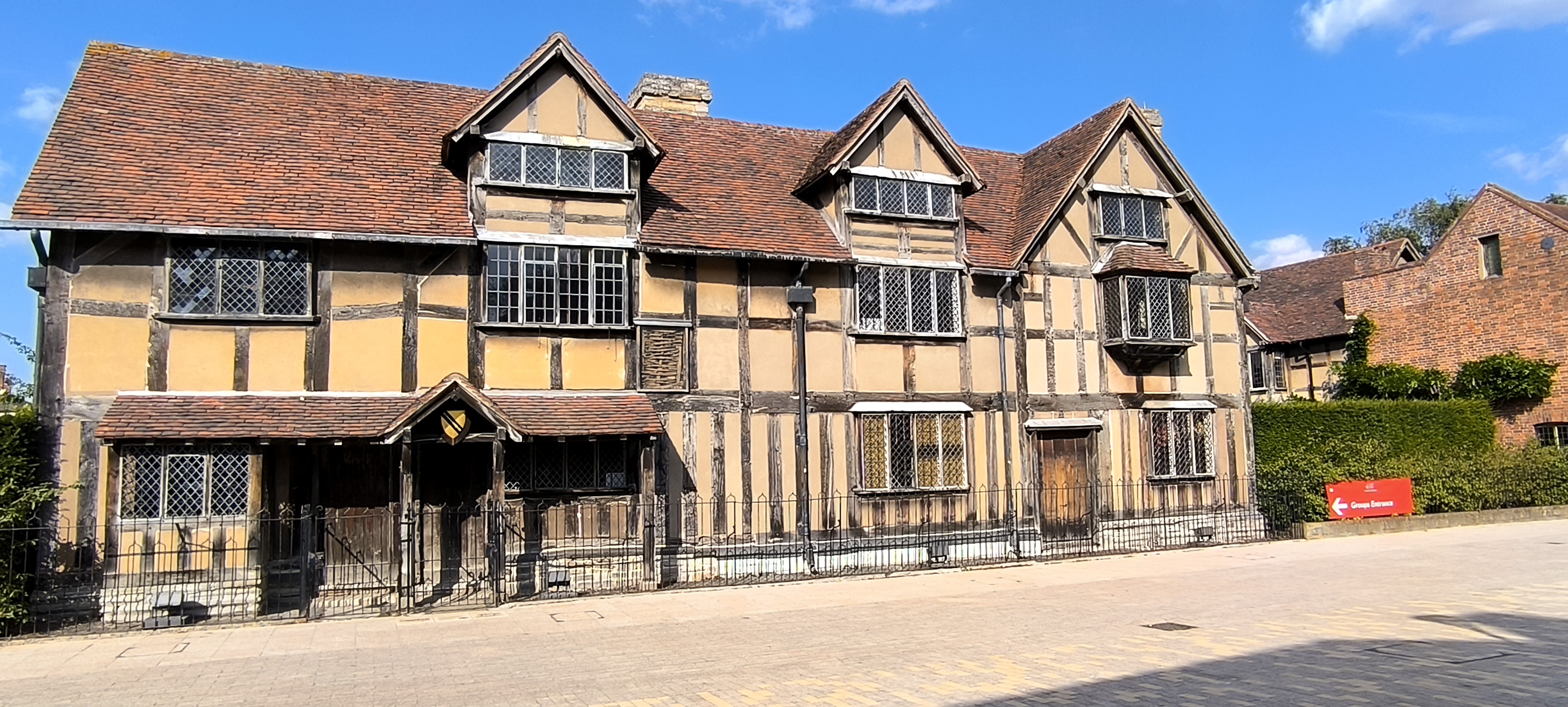
    Shakespeare’s birthplace stands on Henley Street. It is a sixteenth-century, half-timbered building, made with a wooden frame and materials like wattle and daub, stone, and timber. This is believed to be the house where William Shakespeare was born in 1564 and where he spent his childhood. His father, John Shakespeare, lived and worked there as a glove-maker and wool dealer, so it was both a family home and a place of business. As we walked through the rooms, that became easier to understand. There were domestic rooms showing how the family may have lived, and a workshop area connected to his father’s trade.

    What I found fascinating was the history of the house itself. After John Shakespeare died, William inherited the property, though by then he had moved elsewhere in Stratford. The house later passed through the Shakespeare and Hart families and was even used as an inn before it was bought and preserved in the nineteenth century after a public campaign. Walking through the low rooms and seeing the period furnishings made the history feel real, not just something written in a book.

    The exit led through a gift and book shop. Everything was Shakespeare and Stratford. My favourites, of course, were the books.

    Exploring Stratford-upon-Avon

    Next on our list was New Place.

    This is the site of the grand family home Shakespeare bought in 1597 when he became successful. He bought it for his wife and daughters, who lived there permanently, while he spent much of his time working in London. He returned for longer periods over the years and retired there completely around 1611. I had not known any of this before arriving in Stratford-upon-Avon.

    But the house is gone. It was demolished in 1759 by a later owner, a Reverend Francis Gastrell. One of the guides told us the story, and I found it extraordinary. The Reverend was apparently so annoyed by tourists peering into his garden to see Shakespeare’s mulberry tree, and so angry about paying tax on the property, that he razed the whole thing to the ground. I stood there thinking what a loss that was. I would have loved to see how it looked inside, how they lived. Instead, the footprint of the building is outlined in bronze on the ground to show its original scale. It was disappointing, but knowing the reason made it memorable.

    What was not disappointing were the gardens. I walked the entire path with my friend, though he was not especially interested in the literary meanings behind the sculptures. I was. I had to stop at each one, because there was a story behind every piece. Some of them did not look as though they had any particular features at first glance, but I was wrong. They were very intricately made. Amazing artwork, quietly placed, waiting for someone to look properly.

    Exploring Stratford-upon-Avon

    After New Place, we walked to Anne Hathaway’s Cottage in the hamlet of Shottery, about thirty minutes on foot from Stratford-upon-Avon town centre. Even from the roadside, it was not disappointing. We stopped at the coffee shop opposite for tea and cake before going in, which felt like the right way to approach a house that has been standing for over five hundred years.

    The idea of entering a building that old is what amazed me most. From the outside it looked substantial, but inside it was surprisingly small. I understand that rooms were added over the years, and the restorations had been tastefully and carefully done to reflect the period. Upstairs, steep and creaky wooden steps led us to the bedrooms, and to a room with a desk and chair from that era. On the desk were manuscripts, letters, and pieces of paper, all preserved to reflect the importance of not only Shakespeare himself but also the part Anne Hathaway played in his life. It was one of those moments where you stop thinking about history as something distant and start feeling it as something that happened in a room not much bigger than your own.

    By the time we left, we had walked a great deal. We called an Uber back to the hotel for a well-deserved rest. Later that evening, we went back into town for a traditional fish and chips at a place called The Chip Shed, which did not disappoint. After that, we retired to the hotel. Saturday was planned for Warwick Castle, and we needed the rest.

  • Walking It Off — Rochester Castle

    Walking It Off — Rochester Castle


    I did not go to Rochester Castle just to look at old stone. I went because I needed somewhere to put the worry. That is what Walking It Off is about for me: going somewhere, feeling the air on my face, taking in the place, and giving my head enough room to work out what I am carrying.

    Sometimes worry has nowhere useful to go. It sits in your chest, follows you from room to room, and makes even ordinary things feel heavier. I knew I could not think my way out of it by staying still, so I chose to move.

    I needed that space more than usual. The Sunday before this trip, my son had collapsed and been admitted to hospital. He was two hours away from where I live, and at first I had no transport. That helpless distance brought its own kind of tension: the waiting, the worry, and the knowledge that I could not simply get in a car and be there.

    By Monday evening he had been discharged and was recovering at home. I managed to borrow a car and pick him up, which was a huge relief, but it did not mean I suddenly felt all right. His health has been a worry ever since he had an operation on his pituitary gland a couple of years ago. When something happens without warning, my mind does not stay calm. It goes backwards, forwards, and everywhere in between, filling in the blanks with all the things I do not want to imagine.

    So, by the time the day for Rochester came round, the emergency part had passed, but I still felt shaken by it. I was not going to the castle just for a day out. I was going because I needed to clear my head, walk some of the fear off, and try to settle myself enough to write.

    I did not go alone. A long-term friend came with me, someone I have walked and travelled with before. That kind of company helps. You do not have to explain every silence. You can just walk, look, talk when you need to, and not talk when you do not.

    We took the train to Rochester. Somewhere between the movement of the train, the passing stations, and knowing there was a castle waiting at the other end, I started to feel a small shift. The worry was still there, but it was not the only thing in my head. I had somewhere to go, something to look at, and a walk ahead of me.

    My first impression of Rochester was that the history was just there, out in the open. Some places make you search for it, but Rochester did not. There were the old streets, the cathedral nearby, and then the castle itself, standing over the town and the River Medway. It did not feel neat or polished. It felt old, worn, and still very much there.

    The keep caught my eye straight away. It was tall and plain in the way old stone buildings can be. There was nothing soft about it. Knowing it had guarded an important crossing of the Medway, and had been through damage, siege, and rebuilding, made me look at it differently. It was not just a ruin. It had been battered and was still standing.

    That first sight grounded me a little. The castle did not change anything. My son was home and recovering, but the worry had not gone. It was just quieter. Standing there, looking at those walls, I felt my thoughts slow down. I was pulled out of my own head for a while. There was stone, sky, the river nearby, my friend beside me, and a place that had been standing there for far longer than anything I was dealing with.

    As we walked towards it, the size of the castle was the first thing that really hit me. The walls felt huge and a bit overwhelming. They made me feel small before I had even gone inside.

    Inside, it was not the cosy picture of castle life you sometimes get from films or books. It felt harder than that, more exposed, and much more real. There were crumbling stone steps, now protected by railings, and natural light coming in from the open turrets above. You could see where floors and roofs would once have been, and where time had simply taken them away. It felt strange standing inside something so broken and yet so solid.

    I kept thinking about all the feet that must have used those stairs, all the voices that must have carried against the stone, and how uncomfortable daily life must have been inside walls that looked so impressive from the outside.

    As I made my way up, I took it slowly. The steps felt delicate in places, even though they were clearly strong enough to hold us. I could not rush it. I had to move carefully, one part at a time.

    The first room we came to, if you could call it a room, was the small chapel. It was empty of almost everything, apart from a table covered with an off-white cloth and a wooden cross standing in the middle. There was nothing grand about it, but perhaps that was why it caught me. After all the stone, height, and broken edges of the castle, this small plain space felt different.

    I felt the need to stay there for a while. Not for long, just enough to be still and take it in. I found myself thinking about the days before, about my son being home, and about the fear I had been carrying. I also felt thankful. Thankful for mercy, for the fact that he was recovering, and for the chance to stand there quietly and let some of the worry loosen its hold.

    We left the chapel and carried on towards the top. Along the way there were signs explaining what had happened there during the battles of the past. I stopped and read them, and as I did, the place started to change in my mind. The empty stone did not feel so empty anymore.

    I could almost hear the screaming and shouting of people running about, the firing of cannons, and arrows being loosed from rough bows and crossbows. I could imagine the panic, the noise, and the fear of it all. In my mind I could see marks of blood on the walls and hear the silence of the dead afterwards.

    Of course, it was only my imagination. I knew that. But standing there, with the signs in front of me and the broken walls around me, it played through my mind almost like a war film. It made the history feel less like dates and facts, and more like people. People who had been frightened, desperate, brave, or trapped. People who had once stood where I was standing, except for them it had not been a visit. It had been survival.

    Once we reached the top, the view opened out in front of us. We could see the magnificence of Rochester, the River Medway below, and modern boats lined up neatly beside each other. The contrast between where I was standing and what I was looking at was almost too much to take in. It felt like two worlds at once: one full of horror and survival, the other full of beauty and ordinary life carrying on.

    The cathedral was clearly in view, standing there in all its glory. I remember thinking, next stop. But when we made our way down and across to it, we found it was closed for a school service. That was a disappointment. Some places must wait for another visit.

    We spent the best part of an hour and a half inside the castle. On the way out, I bought a couple of fridge magnets. They are small things, really, but I like having something simple to take home. A little marker of where I have been and what I was carrying with me at the time.

    Rochester felt unfinished as we left. Not because the day had been a bad one, but because there was more to see — the cathedral, the old streets, a coastal path I had heard about nearby. I made a mental note to return.

    But for now, it had done what I needed it to do. The worry about my son had not gone. It does not work like that. But somewhere between the train, the old stone, the chapel, and the view from the top, it had loosened its grip a little. That is all I ask of a walk. Not to fix things, but to make room.

    And Rochester made room.


  • A Walk to Walk Off the Pain of Remembrance— Harmondsworth Moor Walk

    A Walk to Walk Off the Pain of Remembrance— Harmondsworth Moor Walk

    I never realised how painful it would be to go back to 2007, the year I was diagnosed with Hodgkin’s Lymphoma.

    Over the course of writing the series about my cancer, the treatment, and everything that happened in between, I have found myself remembering more than I expected. Not just the illness itself, but the people who were part of that time — family, friends, doctors, nurses — all of them tied to memories I had not realised were still so close to the surface. Today I walked it off at Harmondsworth Moor.

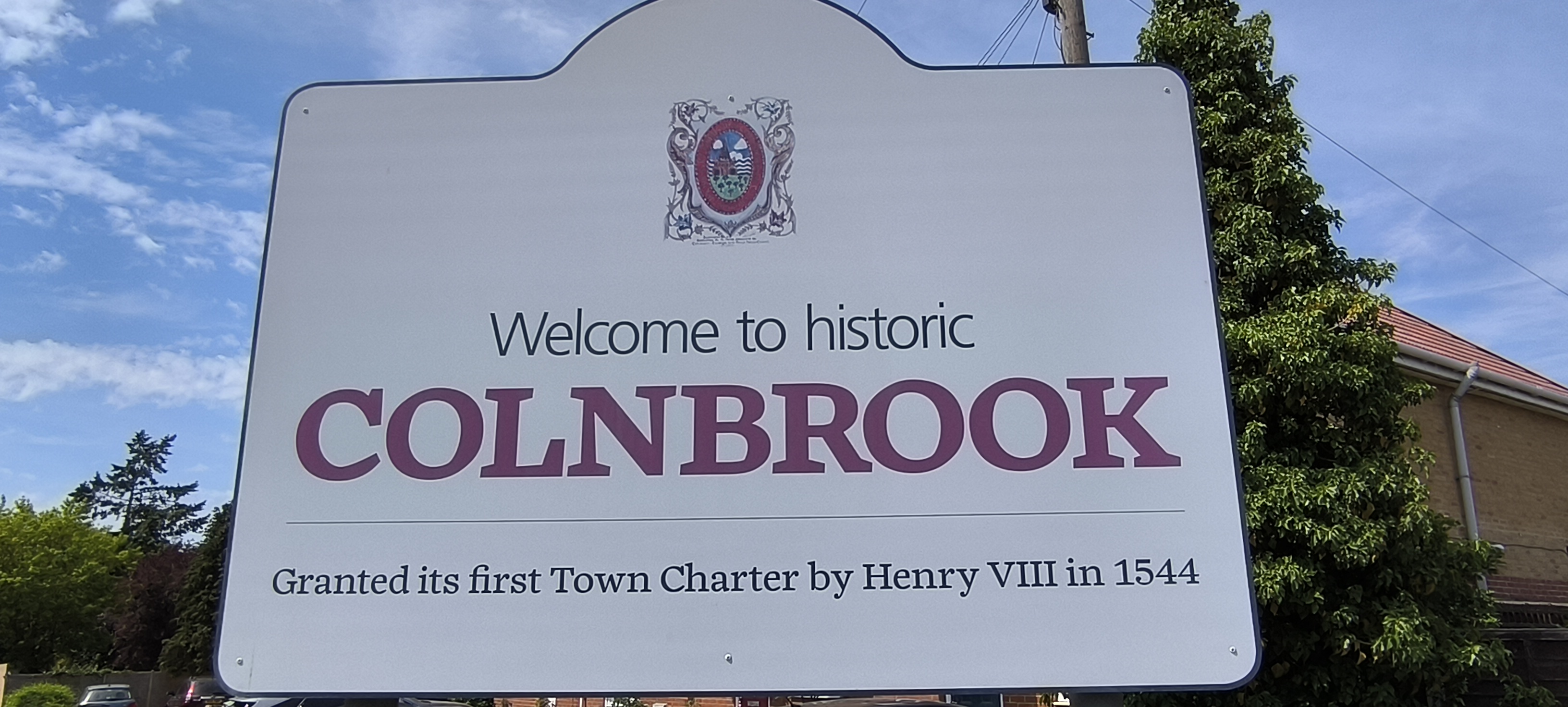
    Today I went for a walk because I needed some distance from all of that. Not distance in miles, really, but distance in my head. Writing about those years has a way of filling every corner of me, and I needed somewhere the memories might loosen their grip a little. While walking around my historic village of Colnbrook, I had discovered a shortcut to Harmondsworth Moor, about a mile away, and it felt like the right place to go.

    I think that is what I needed most today: somewhere that asked nothing of me. Somewhere I could sit if I wanted to, or keep walking, and let the quiet do its work. After writing about my siblings, and about all the people caught up in those years of illness, not just in my care but in Harsha’s as well, my mind has felt crowded. Harmondsworth Moor gave me a little space inside myself again.

    In writing all of this down, I have ended up reliving so many of the days I thought I had already made peace with. The treatments, the fear, the exhaustion, the uncertainty — all of it has a way of returning when you start naming it properly. That, I think, was what I was trying to walk through today. I would not say the walk reset me, because some things do not reset. Grief does not work like that, and neither does memory. But it did give me perspective. Since losing Harsha in August 2019, I have had to learn how to carry grief rather than get rid of it. Nearly seven years on, it still catches me, but it no longer crushes me in quite the same way. The hurt is still there, but less sharp now, and for the first time in a while I can say that walking helped me feel not cured, not finished, but a little lighter.

    I would normally walk from my house through Colnbrook High Street, but today I went the other way, up the hill towards Longford. It is a longer route, but today I needed longer. I needed the time, and I needed the contrast. It starts on a busy road, with the sound of traffic and planes overhead, and then, quite suddenly, that begins to fall away. Within a few minutes, the noise gives way to something quieter, and my thoughts begin to do the same. Usually, I would get distracted by the history of places like Longford, and there is plenty of it there, but today I was not really looking outward. I was trying to make room inside myself. My aim was Harmondsworth Moor, passing through a village I had not properly visited in almost thirty years, and seeing it again felt like stepping briefly into a corner of my own past.

    I passed a couple of pubs without going in, and then, tucked away almost unexpectedly, I came across the Church of St Mary. At the same time, I could hear singing nearby — some 1970s song drifting over from a hall where a party was clearly underway. I liked that contrast: ordinary life carrying on noisily in one place, while I stood drawn towards the churchyard and its quiet. There was the graveyard at the front, another at the back, and then a larger one stretching away to the right. I had no memory of it being there. Standing there, I felt that odd mixture of discovery and recognition, as though I had found not just a place, but a mood I had been searching for all day: somewhere still enough to hold memory without letting it overwhelm me.

    I spent about forty-five minutes in the church grounds, reading the names on some of the gravestones. What struck me most was the dates. Some were from the 1850s, and perhaps there were older ones too, but I did not feel the need to go looking. I found a bench and sat down, not really thinking about anything in particular. Or perhaps that is not quite true. I think I had reached that point where thinking gives way to something quieter, where you stop trying to manage what you are feeling and simply let it sit beside you. I closed my eyes for a moment, though it felt longer. The sun was out, and the warmth on my face was a comfort.

    I got up and asked a woman passing by for directions to the moor, then made my way along a road aptly called Moor Road. By then I had walked about two and a half miles.

    But before I reached the moor, a slight detour, to a place of equal quiet. The British Airways headquarters at Waterside sits just on the left, past a small humpbacked bridge on Moor Road. This was a trip down memory lane, and it almost made me forget why I had come out in the first place. I have fond memories of working at BA and visiting Waterside. I felt the need to go in one more time, to take a look around the landscaped gardens and walkways, laid out to please the soul — benches, picnic tables, and trees set out in a circular fashion.

    Nostalgia fulfilled, I made my way back out onto the road to the moor. I had been here before, in 2022, when I first took up walking for fitness, and a few times since. I could feel that I was going to enjoy this part of the walk. Everything I had been feeling and going through today had already lightened the load I brought with me.

    The entrance to Harmondsworth Moor has a path that winds up past some trees and rough foliage, leading to the large lake, one of a few ponds scattered across the moor. This is a special place.

    I sat on the stone bench by the water. I love water, and I take far more photos than I should — the sun was reflecting off it that day, the first proper sun after nearly a week of rain and dark cloud. My mind had felt like that weather for a while. Dull, dark, hopeless. But here I just sat at the edge and listened to the sounds around me, and that is the true me. My thoughts always work better when I sit somewhere like this and take in the surroundings, especially nature.

    The moor is a rugged place. No manicured grass, no flower beds. And that is exactly what draws me to it — the ruggedness, the rough ground, the man-made paths. Somewhere real.

    I sat there in the cool breeze coming off the lake, and a podcast introduction began playing in my mind. Something I have not yet started, but that has been forming for a while. For the first time, I was not looking backward. I was rehearsing something ahead of me.

    I did not stay as long as I thought I would. I was itching to get around the moor and see the new growth after spring — the smell of the grass, the birds, the bees causing their cliché of a buzz. There is a small mound almost in the centre of the moor, and a memorial to a Canadian Air Force crash, but that is not why I am here. There is a bench overlooking almost the whole of the moor, with the faint sound of cars in the distance, reminding me how close I am to the M25 and the M4. Further off, I can see an aircraft taking off from Heathrow. It still seems almost impossible that somewhere so close to the airport can feel this still. Perhaps that is why it stays with me.

    I sat a while longer, still thinking out loud. Going over My Cancer Story, and where I am today. I still pinch myself. I am here to speak about survival. I am here to have enjoyed the growth of my children and my grandchildren. And along the way, the remorse of losing Harsha in 2019 came flooding back into my mind, for a short time only. This walk was done especially to get past those hurdles and keep moving forward. I will never get over all that has happened in my life, especially the bad stuff. Perhaps I will never fully move on either. But days like this, and places like Harmondsworth Moor — and the many others I plan to visit — will bring a time of reflection, and not sadness.

  • My Cancer Story — The One That Never Really Closes

    My Cancer Story — The One That Never Really Closes

    Closing this series about my cancer story, after nearly twenty years, is harder than I expected. In remembering what I went through, I reopened a wound I thought had long healed.

    On recall, so many people touched my life, and not honouring their quiet involvement would be an injustice. Not only to them, but to me too.

    Behind the immediate family members, my siblings, young and old, there was another set of hands. Wives and husbands. Some of those really wonderful people who helped heal me are not here anymore, and they are so sorely missed. Because it wasn’t just an “I’m here for you” thing. Physically and mentally, they gave up so much of their own time and personal life to stay true to me and Harsha, and for that, gratitude is not enough.

    I forget, even now, that everyone who came and went from my life in those tough years had a life too. Maybe they were battling their own demons but never letting on. When I was stuck in that maelstrom, I instinctively took care of me. Now I wonder what they gave up to be by my side.

    I truly feel that without the backbone of a complete family, my Cancer Story would never have seen the light of day. That complete family, if put to paper, would be like a roll call in a classroom — who is present, and who is not. Even now, as I write, names and places and hospitals keep popping their heads out and shouting, “What about me?”

    And with that, I am forever grateful that I am here to tell the tale that very nearly never happened.

  • My Cancer Story  — Sumi, 1 Look Was All It Took

    My Cancer Story — Sumi, 1 Look Was All It Took

    Sumi During My Cancer

    My Cancer Story would not be complete without Sumi It only took one look. Wide eyes, fixed on you, not a word spoken. No reprimand, no raised voice — just those eyes. And every one of us knew exactly what it meant. We understood, and we got on with it.

    That was Sumi. Our eldest sister, Sumitra, though she was much more than that. Over the years she became our mentor and our second mother.

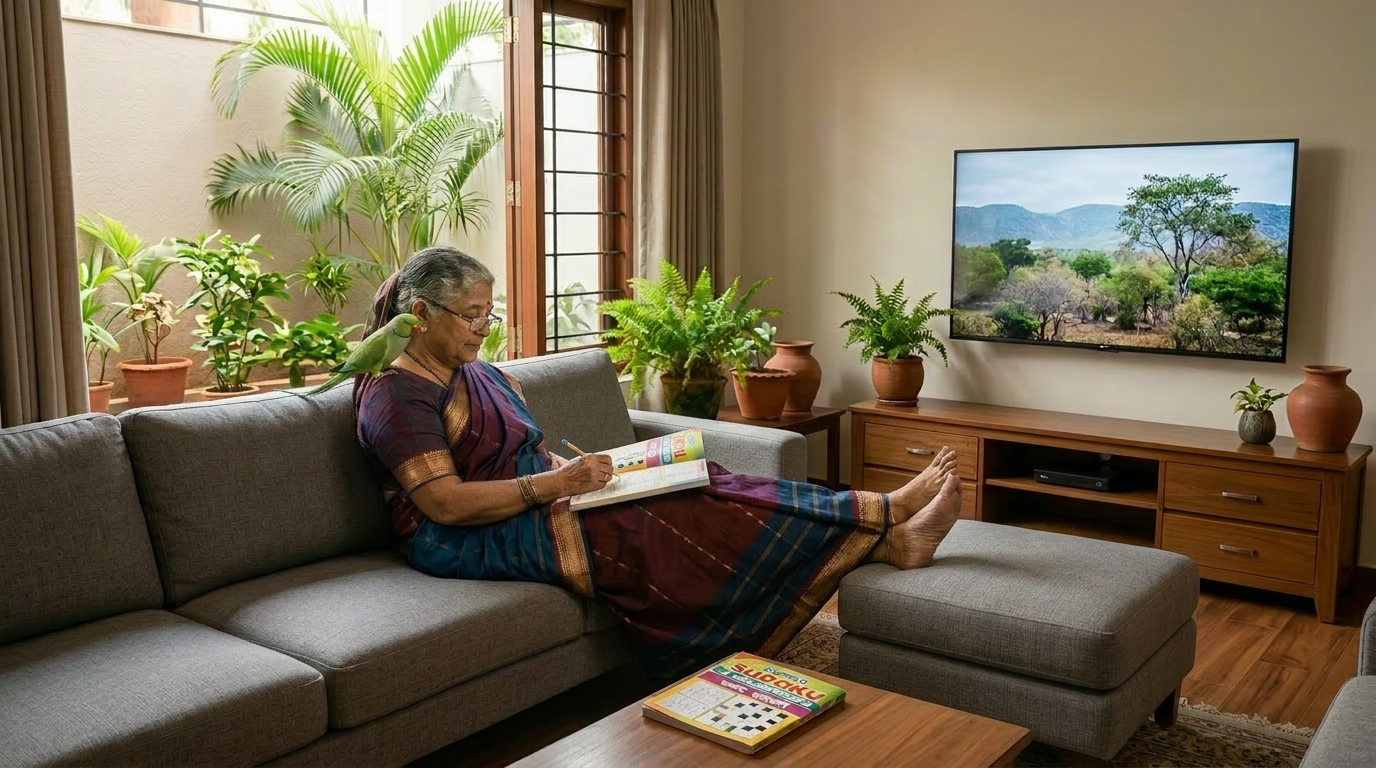
    She was an avid reader and a superb cook. I can still picture her in her favourite seat on the sofa, her pet parrot on her shoulder, working through a Sudoku or a word search. She collected recipes from newspapers and magazines over the years, and all of us were her guinea pigs! Spicy, sweet or savoury, it was cooked to perfection. But the food was never really the point. Everything she did, she did with love.

    Education came first in her world, and so did standing on your own two feet. She taught us household chores, small sewing repairs, how to cook simple food, so that one day we could take care of ourselves. You wouldn’t associate Sumi with sport, but she played hockey for her school, and badminton too. I remember all of us, siblings and the neighbours’ kids, playing in our yard.

    There was something the younger ones never knew. Sumi was born with some defect in her legs. I don’t know the name of the condition. But I remember a photo of her legs bandaged, and I found out later it was to straighten them. She never let on. She just got on with life, and it turned out well in the end. That was Sumi. Whatever she carried, she carried quietly.

    I could write about her endlessly. But it was during my cancer, and during Harsha’s illness, that I really understood who she was.

    In 2005, Harsha had a mini stroke — a TIA, they called it then. In the months after, something changed in the way she understood the world. She would hear how other people addressed someone, and take that name as her own. If she heard our son Mitesh called “Miteshbhai” — brother — then to Harsha he became her brother. Our daughter Rakhi became “Rakhiben,” a sister. Sumi, her sister-in-law, became “Sumifaiba” — aunt. My brother became an elder uncle. The whole family rearranged itself in Harsha’s mind.

    And she called me Dad. People tried to correct her, again and again. I never did. I called her Mum, right to the end. I still do, when I talk to my children.

    The first time Harsha called her “Sumifaiba,” at Sumi’s own house, was strange for all of us. None of us understood it — not Sumi, not Kishore her husband, not me. We put it down to a mind thing after her stroke, and accepted it. But I’ll never forget Sumi’s reaction. She didn’t correct her. She didn’t make it about herself. She just accepted her new name, and loved Harsha the same as always. To watch Sumi and Kishore afterwards, and the feelings that came with it, is something I have never forgotten.

    That was Sumi. Faced with something none of us understood, she just took it in her stride.

    When my own diagnosis came in 2007, she was ever present. Harsha needed someone she could talk to, and Sumi’s house became a place we visited often, sometimes at short notice. Sumi never refused. And she was doing all this while battling her own health, and nursing Kishore through his. You would never have known it. She was there for me, for Harsha, for her family, for anyone who needed her. She was just there. Always.

    Sumi passed during the first COVID lockdown. Losing someone in those days was hard — the distance, the restrictions, the things that couldn’t be done at the time. We have since been able to do right by her, but I’ll come to that later.

    For now, I just want to remember her as she was. One look. Wide eyes. No words needed. A sister who carried her own troubles quietly, and spent her life making sure everyone around her was looked after.

    She was our eldest sister. She was our second mother. And she is missed, every single day.


  • Colnbrook Village History Walk — 30 Years Before I Finally Saw My Own Village

    Colnbrook Village History Walk — 30 Years Before I Finally Saw My Own Village

    “This is the first in a new series called Walking It Off — a Colnbrook village history walk that changed how I see home. Murder, ghosts, royalty, and my wife’s old pub, all within half a mile of my front door.”

    I have lived in Colnbrook for more than three decades. I have driven through it, walked to the corner shop, nodded at neighbours, and thought I knew the place. It took a pandemic to prove me wrong.

    In 2021, Covid stopped everything. When I recovered, I did what a lot of people did — I rediscovered my feet. Instead of driving somewhere worthy, some National Trust car park an hour away, I decided to see what was actually on my own doorstep. So one quiet afternoon in 2022, I pulled on my shoes and walked out of the front door with no particular plan. Just Colnbrook. On foot. Properly, for the first time.

    What I found astonished me.

    A Colnbrook Village History Walk Begins Here

    Walking down the High Street, it is remarkably peaceful. But you are walking on the Old Bath Road — once the premier highway connecting London to the West Country. Because Colnbrook sat exactly one day’s travel from London, about 17 miles, it became the ultimate stopping point. In 1577, this tiny stretch had ten coaching inns serving travellers, royal carriages, and heavy turnpike wagons. The village only kept its narrow, medieval character because a bypass was built in 1929, freezing the High Street in time.

    Standing on that street, I noticed something I must have driven past a hundred times without ever registering. Right opposite the Ostrich Inn, the old 17th-mile stone still stands. I stopped and took a photograph. It is just a stone, but it felt like a doorway into something. I wanted to know more.

    Murder, Ghosts, and Royalty

    Colnbrook with Poyle has 36 listed buildings, and their stories are extraordinary.

    The Ostrich Inn is the crown jewel. Founded in 1106, it is the third oldest pub in the UK — and one of the darkest. In the 17th century, a landlord named Jarman built a mechanical trapdoor in the Blue Room. Wealthy guests would be tipped through it into a boiling cauldron in the kitchen below. His final victim, a man named Thomas Cole, is said to still wander the corridors. I have been in the Ostrich since that walk. Knowing what I now know, I looked at it rather differently.

    Just down the road, Ye Olde George Inn carries its own royal history. In 1555, Princess Elizabeth — not yet queen — stayed here as a prisoner while being moved to Hampton Court. And tucked between the George and the Ostrich, almost invisible unless you know it is there, is a Methodist church accessed through a tiny entrance off the High Street. Faith and ale, side by side for centuries. Colnbrook has always made room for both.

    The Star and Garter

    This is the part of the walk that stayed with me longest.

    The Star and Garter on Park Street closed in 2015 after decades as a cosy, busy local. It sat empty for roughly twelve years before being converted into residential apartments. The car park is still being built over as I write this. But the facade remains exactly as it was. The old pub sign is still there. From the outside, it looks like it could open tomorrow.

    My wife Harsha was the chef there from around 2001 to 2004. It was a tiny pub inside — you would not believe how small — but it served as a proper local for the villagers. The landlord was a man called John, a local Tory of some description. The barmaid was a woman called Sue, whose husband was one of my customers when I worked at British Airways. I still bump into him occasionally.

    Standing outside the Star and Garter on that 2022 walk, knowing Harsha had cooked in that kitchen, knowing her health had taken over not long after she left — it was a strange feeling. The building preserved perfectly on the outside, changed completely within. I know how that feels.

    What I did not realise until I looked it up later is that King John’s Palace — a c.1600 manor — is directly attached to the Star and Garter. Harsha was cooking next door to a medieval palace. She never mentioned it. I doubt she knew.

    Just yards away, the Colne Brook runs quietly under a small bridge — one of the two streams that give the village its name. It is easy to miss if you are driving. On foot you stop, look down, and wonder how many thousands of people have crossed this same point over the centuries. It is moments like this that make a Colnbrook village history walk worth doing slowly.

    The Small Details

    Walking a little further, you encounter the kind of things that only reveal themselves on foot. A house called Toad Hall with a tiny door that looks built for someone considerably shorter than the rest of us. Nearby, Black Boys Cottage and White Cottage stand almost side by side — two names, two histories, quietly facing each other across the years.

    St Thomas’s Church

    Set back from the bustle of the High Street, St Thomas’s Church was consecrated in 1852 — the year Colnbrook finally became a parish in its own right, no longer dependent on clergy from neighbouring villages. It is Grade II Listed, built in a quiet location that is now, less quietly, surrounded by a housing estate. The old world hemmed in by the new. You see that a lot in Colnbrook.

    I have been inside twice. Once for a coffee morning, which was warm and welcoming in the way only village church coffee mornings can be. And once for the funeral of a neighbour — the local Colnbrook and Poyle secretary for many years. A man who served his community and was buried in his community’s church. There was something right about that.

    What draws me back, though, is the churchyard. I have a passion for old gravestones — reading the names, the dates, the small inscriptions that are all that remain of a life. The older the stone, the better. There is something about standing in front of a gravestone from two or three centuries ago and realising that this person walked the same High Street, crossed the same bridge over the Colne Brook, perhaps even stopped at the Ostrich for a drink. We are not so different. We are just further apart in time.

    A Village That Has Changed

    The demography of Colnbrook has shifted dramatically in recent years, largely because of its proximity to Heathrow. Many of the original villagers have left or passed away. The local postmaster, who served Colnbrook for more than thirty years, is gone. The connections that held the village together are looser now, and some have gone altogether.

    That is not unique to Colnbrook. It happens everywhere. But it feels more noticeable in a small place, where you could once name most of the faces on the High Street.

    The Walk I Still Do

    That first Colnbrook village history walk opened my eyes to what I had been missing. I found a shortcut that leads to the Colnbrook Bypass, from where you can walk out to Harmondsworth Moor. I still do that walk every couple of weeks. Sometimes I listen to music. Sometimes an audiobook or a podcast. Sometimes nothing at all. It clears my head, gives me perspective on whatever is weighing on me, and reminds me that I am lucky to have it on my doorstep.

    I started walking alone in 2022. For a couple of years it was just me. Then an old friend got back in touch — he wanted the same thing, a regular walk, fresh air, somewhere to think. Now we go together sometimes.

    If you have lived here for years and never walked the High Street properly, do it. Not as a tourist. Just as someone who lives here and wants to know where they actually are. You might be surprised by what you find.

    I certainly was.

  • My Cancer Story — Supporting Family With Cancer From Abroad — My Powerful Sister Pratibha’s Inspiring Story

    My Cancer Story — Supporting Family With Cancer From Abroad — My Powerful Sister Pratibha’s Inspiring Story

    Supporting family with cancer from abroad is something my youngest sister Pratibha knew more about than anyone. Thousands of miles away in Canada, she found her own way to be there

    We grew up in Jinja, Bugerere, Iganga, and then Kampala. It always felt as though we were settling somewhere just as it was time to leave again. That is how life was then, following my father’s work. Keeping long-term friendships was difficult, and it was not always easy, especially as we got older and they began to matter more.

    Kampala was where we stayed the longest. Pratibha was seven then, and Jitu about three. We lived among sixteen families, and it felt like a small community. There were always children around, always something going on. Looking back now, I think those were simpler days, although we didn’t realise it at the time.

    That chapter ended abruptly. Idi Amin saw to that. In June 1972, we arrived in Leicester and started again. Pratibha and Jitu went to school, while I began work that September. Little did I know then that I would spend the next fifty years in employment — seven in Leicester and the rest, after I got married, in London.

    Between 1977 and 1979, Bipin, Pratibha, and I all got married, which took us to three different cities, all in the London area. When I think about it now, I notice something curious. Kampala, Leicester, London — there always seemed to be a seven-year pattern to our lives. I wonder sometimes if it means something, or whether it is just the way things fell.

    Supporting Family With Cancer From Abroad

    In 1989, Pratibha emigrated to Canada with her husband and son. A new venture, a new life. The distance between us grew, but the connection never did. It was a brave decision — leaving everything familiar behind to build a new life from scratch. Canada became her home, and she built a good life there. But distance has a way of making itself felt most sharply at the hardest moments.

    Years passed, as they do.

    When I was diagnosed with cancer, Pratibha was thousands of miles away. That distance felt very real at the time. I also knew she was not well herself. I had seen that when I visited her in 1993 with my wife and children. She was in hospital then, seriously ill with kidney failure. From that point on, her health became something she had to manage and live with every day. Over the years she endured long periods on dialysis before eventually receiving a kidney transplant. It took great courage and patience, and she bore it quietly.

    Because of all that, travelling to the UK to see me was simply not possible, and I understood completely. But she never stopped being there in the ways she could.

    She would call. Sometimes just for a few minutes. Sometimes longer. Just to ask how I was.

    It is difficult to explain what that meant at the time. When you are dealing with something like cancer, your mind goes in all directions. But hearing her voice would steady things, even if only for a short while. Distance suddenly felt smaller. The worries eased. You are reminded that you are not facing things alone.

    She had her own battles to deal with, and I knew that. But that never came before thinking of me and my family. That was just how she was.

    Looking back now, I realise that it was not about what she could or couldn’t do.

    It was simply that she was there.

    And in those days, that was enough.

    For anyone supporting family with cancer from abroad, Pratibha’s story will feel familiar.

    For anyone supporting a loved one through cancer from a distance, the Canadian Cancer Society offers guidance and resources at cancer.ca.