Author: Anil J

  • Could I Really Leave? — Why Leicester Is Calling Me Home

    Could I Really Leave? — Why Leicester Is Calling Me Home

    I would leave where I’m living now within a heartbeat. That is the honest answer, and it surprised me how quickly it came.

    After my recent trip to Leicester, the question stopped being hypothetical. I have visited Leicester many times over the years, but this last trip felt different. There was no wedding pulling me back, no funeral, no obligation. I went because I wanted to, and while I was there I found myself thinking not about the past, but about the future. Could I live here again?

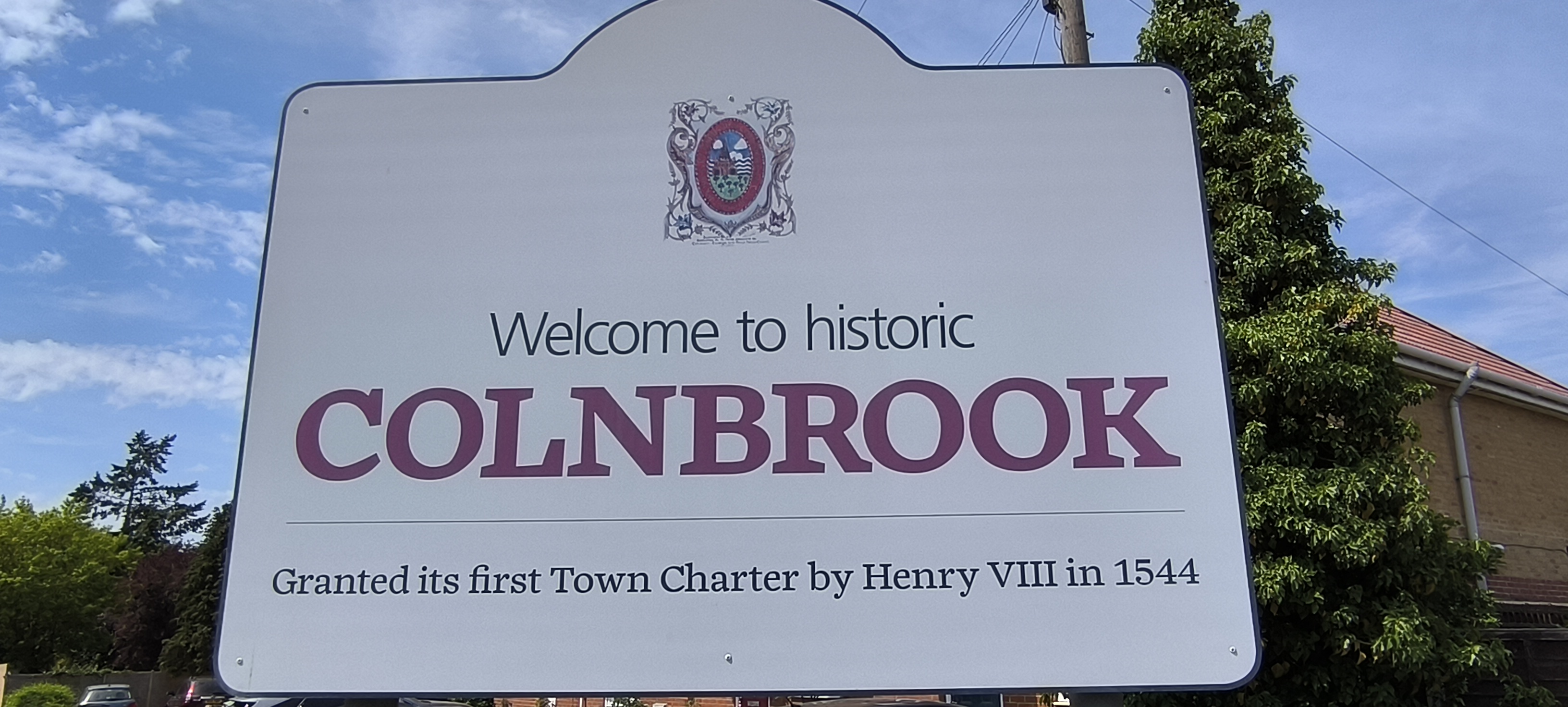
    Leicester was my home for seven years after we arrived from Uganda in 1972. My parents lived there. My brother Jitu still lives there. I have family, old friends, and connections that go back more than fifty years. Whenever I go, I feel something I do not feel in Colnbrook. I feel like I am home.

    I have lived in Colnbrook for over thirty years. It has been a good place in many ways, and I have written about its history and walked its streets more carefully than most people who live here. But something has shifted in me. After more than fifty years of working, from the age of seventeen to retirement at sixty-five, and after seven years of being alone since Harsha passed, I have reached a point where my own space matters more than anything else.

    I sit every day on the seat that used to be Harsha’s. She would sit there and paint. Now I sit there alone. Alone in my heart, alone in my head, alone in a house that sometimes feels too full of other people’s lives and not enough of my own.

    I am not looking to run away. I am looking to find something. Somewhere quieter. Somewhere I can spend a whole day without the noise and interruptions that seem to follow me here. Somewhere I can write, walk, think, and simply be. I have spent most of my life doing everything for everyone else. Now, for however many years I have left, I want to do something for me.

    I have talked to my daughter about it. The conversation is one we have had more than once, and it never quite resolves. She does not want me to go — I can hear that clearly enough, even when she does not say it directly. Instead, she suggests that perhaps she should be the one to move. But she cannot, not with her situation as it is. And so the conversation circles, lands nowhere, and we both leave it where it sits until next time. I understand her worry. A father leaving is not a small thing, no matter how old the father is or how good his reasons are.

    Why Leicester

    But the pull is real. Leicester offers things that simply do not exist where I live now. There are walking groups I could join. Temples that serve the community in ways that go beyond worship — places where older people gather, where the language spoken is Gujarati, the language I grew up with, the language I think in. There are parks with activities suited to someone my age, restaurants serving food that tastes like home, and a social life that I do not have here.

    Most of all, there is Jitu. I walked him to school in Kampala when he was small. I bought him his first bike. I was the older brother who looked out for the youngest. Now, more than fifty years later, I find myself wanting to be near him again — not because he needs me the way he once did, but because I need the closeness. Moving to Leicester would bring that full circle, back to where it all started for both of us.

    Leicester is at the top of my list. I have thought about the countryside too, somewhere truly quiet. I have even thought about going abroad. I do not have a final answer yet. But I know that the question has stopped being “would I leave?” and become “when?”

    Something happened recently that confirmed what I already felt. I will not go into the details, but it reminded me that I am in a place where things outside my control keep pulling me into situations I did not choose and do not want. I have spent too many years being dragged into other people’s difficulties. I am trying to break that pattern before it pulls me into another spiral.

    This is not a decision I will make overnight. There are practical things to work out, people to consider, and a lifetime of roots in this part of the world that do not pull up easily. But the thought is no longer just a thought. It is becoming a plan.

    Could I really leave? Yes. I could leave tomorrow if the pieces fell into place. The harder question is whether the people around me are ready for that. And whether I am brave enough to choose myself, after a lifetime of choosing everyone else.

    I think I am getting there.

  • Just Do It

    Just Do It

    Just do it. This is my motto. Now you can’t stop as there’s so much to do and so little time to do it in, so just get on with it and don’t complain or make excuses.

    That paragraph describes who I am now. After years of servitude and taking care of the necessary needs of life. Now, more than ever, it’s my time to do all the things that make me happy. Not that I wasn’t happy before. I was living for someone else. My life was on the back burner.

    What makes me happy? Being outdoors. Writing, whenever possible. I’m still learning a lot on this final phase of my life, however long it may last.

    But the journey has to be fulfilling. I keep daydreaming of things I haven’t done or achieved any goals. Mental note made to make a daydreaming list!

    If I could send my future self one sentence, it would be this: just do it.

  • Leicester — A Homecoming

    Leicester — A Homecoming

    I have visited Leicester many times since I left at the end of 1979, but those trips had always had a reason behind them — a wedding, a birthday, an invitation, or a funeral. I never really felt I was going home. I had arrived in Leicester on 19 June 1972, after being exiled from Uganda, and spent seven years working and living there with my parents and two younger siblings. It became my second hometown after Kampala.

    This time was different. On 18 July 2026, I took a coach to spend a couple of days with my younger brother, Jitu. There was no formal occasion pulling me back, no timetable set by someone else, no family duty to fulfil. I was returning simply because Leicester mattered to me, and because I wanted to walk again through a place that had shaped a part of my life.

    But I also went with a question in my mind. Could I live here again?

    I arrived late in the evening, so Jitu, his wife and I spent the night catching up on the year that had passed since we had last met. The next day, Saturday, we visited two temples. The first was the Hanumanji Temple, which is relatively new in Leicester. Being a Saturday, an auspicious day for offering prayers to Hanumanji, the temple was packed with devotees. I was not just visiting out of curiosity. I wanted to see how it would fit into my life if I came back. The answer was clear. Many of the people there were older, like me, and the temple served them in ways that went beyond prayer. It was a place to belong.

    We then made our way to Leicester’s main Indian shopping area, Belgrave Road and Melton Road, where the shops, restaurants and gold jewellers have long been part of the city’s familiar landscape. I wanted to walk along the same road I had walked during my first seven years in Leicester. As we visited different shops, I kept looking around, amazed by how much the place had changed. The language around me was Gujarati. People were speaking the language I grew up with, the language I think in, the language that is largely absent from where I live now.

    It was a beautiful sunny day, so we walked to the Sai Temple. Along the way, I kept reliving my life in Leicester. There was the Brahm Samaj building, where I had spent many happy occasions with my family, and later with my wife, Harsha. Not far from where I had lived. I also saw a church whose name had changed, now used as a venue for events. I remembered attending my niece’s wedding there many years ago. Then a sadder memory surfaced — my maternal uncle, who had fallen and been badly hurt nearby. Happiness and sadness, side by side in the same place. Leicester has always been like that for me.

    I had once worked at a factory not far from the city centre. I saw the shortcuts that used to lead to it, though the factory had not existed for a very long time. And I thought of Abbey Park, where I used to secretly meet my first and only girlfriend. I wondered where life had taken her.

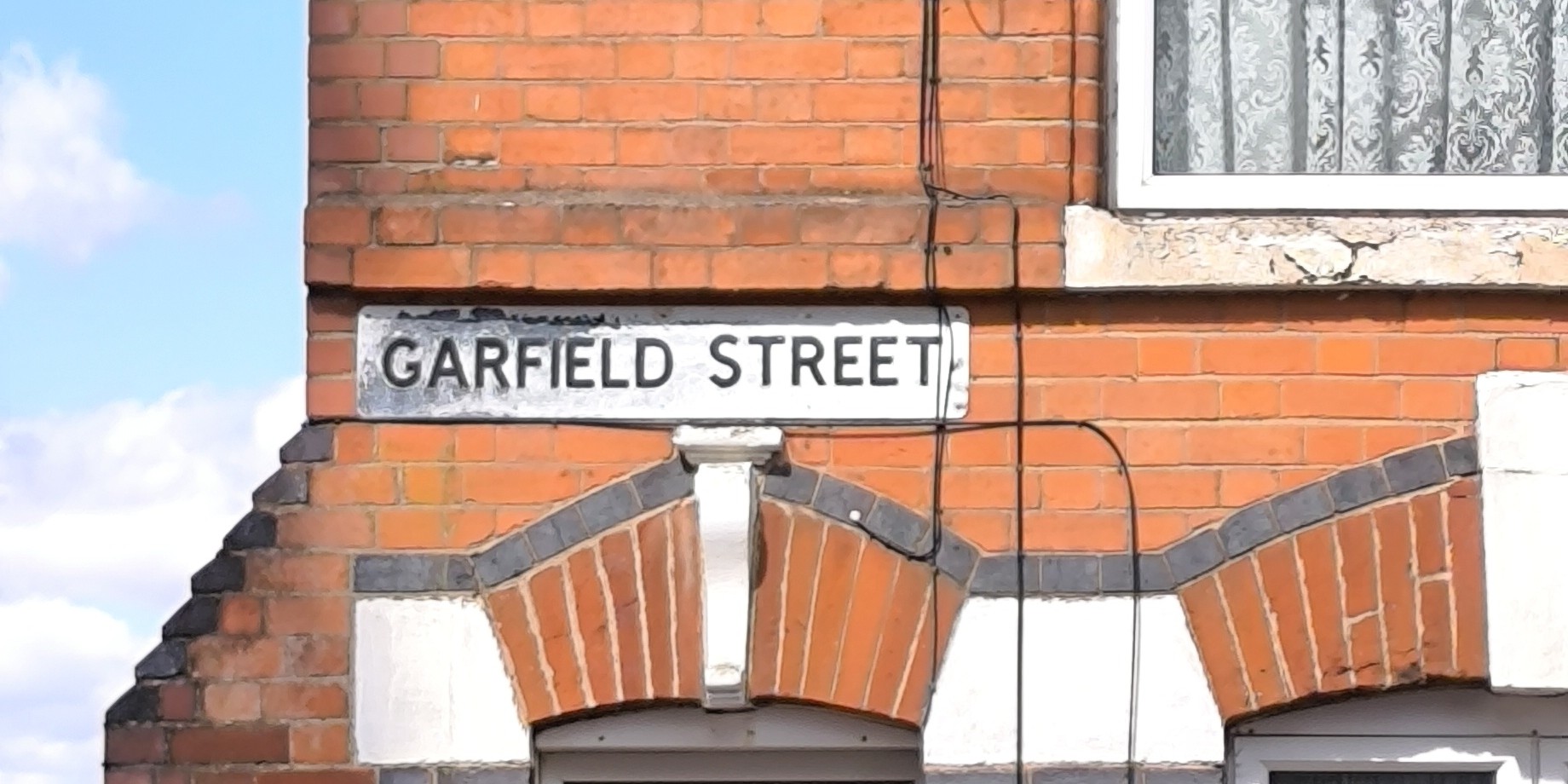
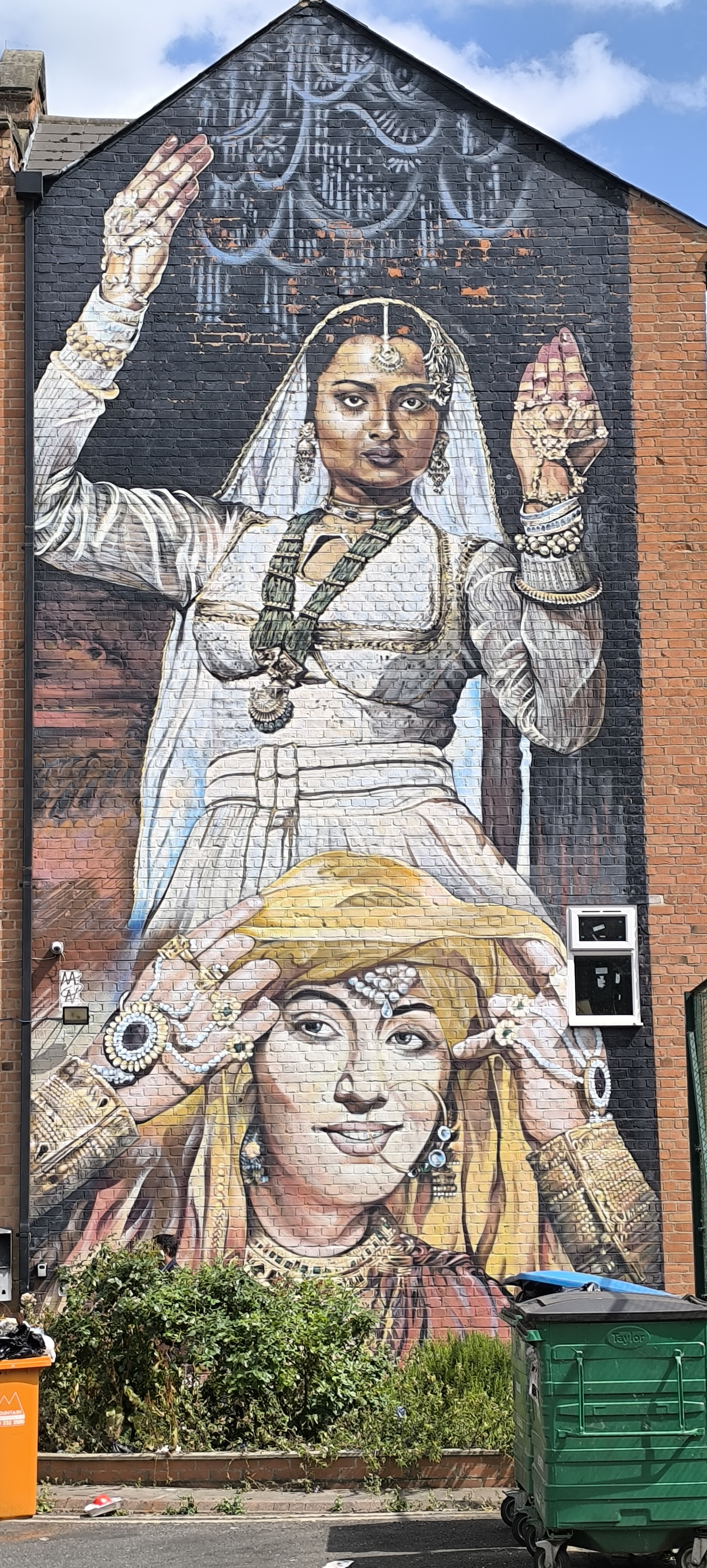
    We turned back and crossed the dual carriageway. Along the way, I deliberately took a turn towards Garfield Street, where we had owned our first home. On the way, I noticed a mural painted across a two-storey wall showing two Bollywood stars. I had to stop and take a photograph. I also took a picture of the front door and the street sign. What surprised me most was how much had disappeared. The terraced houses on the opposite side had been demolished. The small factory at the end of my old street had gone, replaced by retirement homes.

    We left Garfield Street and made our way back along Belgrave Road. I walked slowly, remembering a time when people I knew would stop to say hello, or when I could walk into a shop and chat to an owner I had known from the past. No one stopped me now. Many of the old shops no longer existed.

    On Sunday, I spent the morning with my maternal cousin at his new house. Remembering the past is always nostalgic, and somehow enjoyable too. By the time we had had some tea and talked non-stop for an hour and a half, it was time to leave. I had arranged to meet someone I had not seen in a very long time.

    A Friend From My First Days in Leicester

    Barry was the first white man to show me the ropes when I started work at the factory in 1972. He respected me for who I was — an immigrant from Uganda who did not know how anything worked in this country. That meant more than I can easily say. Over the years, I taught him and his wife to make potato curry and puri. He calls me Bhai — the Gujarati word for brother. We share a love of heavy rock music and Indian food. He is retired now, mostly, shooting vermin on farms for a part-time living. He has a family and is a grandfather.

    We met at the Woolpack pub, which I believe was his local. Apart from losing his hair and putting on a little weight, he was exactly as I remembered him. After a hug, we sat outside over a couple of beers and talked about the past, the present, and what life had brought us since those days. The curry and puri came up, of course. Forty-seven years had passed since we last sat together, and the hour we had felt far too short. Barely enough time to catch our breath.

    That hour with Barry was the happiest moment of the whole trip. I am going back for more. Next time I will meet his wife and possibly his family too.

    I had a coach to catch at 5.30 pm. Jitu picked me up, and after a short stop, he took me to St Margaret’s Bus Station. As I waited for the coach, I was not thinking about what I was leaving behind. I was thinking about what I might be coming back to.

    Leicester has walking groups, parks with activities for older people, temples that serve the community in ways that go beyond worship, and a social life that simply does not exist where I live now. Most of all, it has Jitu. Coming back would bring me closer to my youngest sibling, the brother I walked to school in Kampala.

    I am not certain yet. But standing at that bus station, I felt more sure than I have in a long time that Leicester is where my final chapter should begin.

  • Warwick Castle — A Day That Was Never Going to Be Long Enough

    Warwick Castle — A Day That Was Never Going to Be Long Enough

    On Saturday morning, after a breakfast big enough to last the day, my friend Jessie and I caught the X18 bus to spend the day at Warwick Castle in Warwick.. Schools had broken up for the summer the day before, so we knew it would be busy. Our plan was to get there early. When we arrived, the queue was already long, but it was moving.

    We had booked tickets online, which saved both money and time. The bus dropped us opposite Castle Lane, and from there it was a short walk through the car park to the entrance. On either side of the arched entranceway, large maps showed the scale of what lay ahead. This was not going to be a quick visit.

    And it did not disappoint. The circular tower was the first thing I saw, looming high into the sky. A bridge led to the castle entrance, and above the huge doorway there was a clock and a portcullis-style gate. I could immediately picture how it would have been lowered to keep enemies at bay. That is what old castles do to me — they make my imagination fill in what the stone no longer shows.

    Warwick Castle has stood in some form for over a thousand years. It began as an Anglo-Saxon fortification in 914, was rebuilt as a Norman fortress after the Conquest, expanded and fought over through centuries of war, transformed into a grand stately home, and eventually opened to the public in 1978. Walking through it, you feel every one of those layers.

    Inside Warwick Castle

    We made our way up a stone staircase to the Great Hall, which now serves as the armoury. I could have spent an hour in that room alone. The collection was vast — bows and arrows, spears, lances, knives, swords, long shotguns with bayonets. There were early pistols and what I learned was a precursor to a grenade launcher, which apparently had a tendency to blow up in the holder’s hands. That made them unpopular, unsurprisingly, and examples are now rare. Two life-size display horses stood with figures in full suits of armour. I looked at them and tried to imagine the weight of all that metal on a man’s body. Awesome is a word I do not use often, but the armoury earned it.

    From there we moved through the castle’s grand rooms. Each one had something that surprised me. The Cedar Drawing Room, the largest, was originally a ballroom, with panelling from the 1670s. The Green Drawing Room had a ceiling replicated from a Roman temple in Palmyra, Syria — a temple that was destroyed in the 2015 conflict, making this ceiling the only surviving version. That stopped me. A room in an English castle holding the last trace of something ancient from the other side of the world.

    But the detail that caught me most was smaller and quieter. In one of the rooms, there were a couple of Japanese dish bowls, beautifully made, which would have been used for guests to wash their hands. The quality of the workmanship was extraordinary. I stood there looking at them, thinking about the hands that had made them and the hands that had used them, centuries apart. It is always the small things that stay with me.

    The Queen Anne Bedroom held the bed in which Queen Anne is believed to have died in 1714, adorned with red velvet and gold floral silk. It had been gifted to the castle by King George III. The Blue Boudoir, originally a dressing room, had been converted by Daisy Greville, a socialite turned activist, into her private writing room. It also housed waxwork figures of Henry VIII and his six wives. Every room had its own character, its own story, and we spent more time inside than we had planned.

    Eventually we made our way outside. The Time Tower had two rooms showing short films about the castle’s eleven hundred years of history. It was a warm day and the crowds were large, which meant queuing for everything. We stopped for a short lunch break, which turned out to be a mistake — not for me, but for Jessie. He had wanted to see the trebuchet show, and we missed it. Too much time spent inside the castle. I was not sorry about that, but he was.

    There was still plenty to see. The War of the Roses live show was next, and the queue had already started forming a good hour before it began. A long wait on our feet, but it was worth it. When the time came, the crowd surged forward across the bridge to River Island. There was a huge arena with stands on both sides. The show lasted about forty-five minutes and was spectacular — trained actors performing jousting, sword fights, and stunts, with fireworks and speakers describing the history of the conflict. The horsemanship was excellent. It felt less like entertainment and more like a window into something real. The story behind the Wars of the Roses is a history book in itself, and I would rather the reader imagined what it must have been like all those hundreds of years ago than have me try to summarise it here.

    About half an hour after that, the falconry show began — an endangered species display that was both beautiful and sobering. We stayed for it, and then stayed until Warwick Castle its gates.

    By the time we left, we had been there the best part of a full day and it still did not feel long enough. We caught the bus back to Stratford-upon-Avon, had our final meal at the hotel, and packed up for the journey home on Sunday. The train back to Marylebone got us there by mid-afternoon.

    Warwick Castle is one of those places that gives you more than you expect. I went hoping for old stone and a bit of history. What I got was a thousand years of it, a room full of weapons that made me glad I live in this century, a Japanese bowl that made me think about craftsmanship and time, and a live battle that made me feel, just for a moment, what it might have been like to stand on that ground when it actually mattered.

    I would go back. There is more to see. There always is.

  • Stratford-upon-Avon — Visiting Shakespeare Country

    Stratford-upon-Avon — Visiting Shakespeare Country

    On Thursday, 16 July, my friend and I took the train to Stratford-upon-Avon. I had been looking forward to the trip. I enjoy literature, and who has not heard of Shakespeare? But I also had a quiet worry that it might be a damp squib — just a normal town with old buildings, trading only on its famous past.

    We left from Marylebone, changed at Leamington Spa, and arrived at about 3.45 pm. The journey took about two and a half hours with frequent stops, but I do not mind trains. They avoid the traffic, and there is something about watching the countryside pass that settles me.

    We checked into our hotel, which we had deliberately chosen to be close to the town centre, freshened up, and went exploring. Almost everything closed at around 5 pm, so the first evening was mainly about getting the feel of the place and working out how to make the most of Friday.

    My first impression was promising. The town felt compact, walkable, and full of hints that Shakespeare’s presence still shaped the streets around it. I was relieved. This was not a theme park. It felt like a real place that happened to hold an extraordinary history.

    On Friday, after a hearty breakfast, we made our way to the Shakespeare Visitor Centre. You could book tickets there for three attractions linked to Shakespeare. The centre itself had an exhibition — two rooms showing videos with quotes from his works, and displays of the clothing, money, pottery, paintings, and notebooks from his time. The exit led along a garden path to the house.

    Shakespeare’s birthplace stands on Henley Street. It is a sixteenth-century, half-timbered building, made with a wooden frame and materials like wattle and daub, stone, and timber. This is believed to be the house where William Shakespeare was born in 1564 and where he spent his childhood. His father, John Shakespeare, lived and worked there as a glove-maker and wool dealer, so it was both a family home and a place of business. As we walked through the rooms, that became easier to understand. There were domestic rooms showing how the family may have lived, and a workshop area connected to his father’s trade.

    What I found fascinating was the history of the house itself. After John Shakespeare died, William inherited the property, though by then he had moved elsewhere in Stratford. The house later passed through the Shakespeare and Hart families and was even used as an inn before it was bought and preserved in the nineteenth century after a public campaign. Walking through the low rooms and seeing the period furnishings made the history feel real, not just something written in a book.

    The exit led through a gift and book shop. Everything was Shakespeare and Stratford. My favourites, of course, were the books.

    Exploring Stratford-upon-Avon

    Next on our list was New Place.

    This is the site of the grand family home Shakespeare bought in 1597 when he became successful. He bought it for his wife and daughters, who lived there permanently, while he spent much of his time working in London. He returned for longer periods over the years and retired there completely around 1611. I had not known any of this before arriving in Stratford-upon-Avon.

    But the house is gone. It was demolished in 1759 by a later owner, a Reverend Francis Gastrell. One of the guides told us the story, and I found it extraordinary. The Reverend was apparently so annoyed by tourists peering into his garden to see Shakespeare’s mulberry tree, and so angry about paying tax on the property, that he razed the whole thing to the ground. I stood there thinking what a loss that was. I would have loved to see how it looked inside, how they lived. Instead, the footprint of the building is outlined in bronze on the ground to show its original scale. It was disappointing, but knowing the reason made it memorable.

    What was not disappointing were the gardens. I walked the entire path with my friend, though he was not especially interested in the literary meanings behind the sculptures. I was. I had to stop at each one, because there was a story behind every piece. Some of them did not look as though they had any particular features at first glance, but I was wrong. They were very intricately made. Amazing artwork, quietly placed, waiting for someone to look properly.

    Exploring Stratford-upon-Avon

    After New Place, we walked to Anne Hathaway’s Cottage in the hamlet of Shottery, about thirty minutes on foot from Stratford-upon-Avon town centre. Even from the roadside, it was not disappointing. We stopped at the coffee shop opposite for tea and cake before going in, which felt like the right way to approach a house that has been standing for over five hundred years.

    The idea of entering a building that old is what amazed me most. From the outside it looked substantial, but inside it was surprisingly small. I understand that rooms were added over the years, and the restorations had been tastefully and carefully done to reflect the period. Upstairs, steep and creaky wooden steps led us to the bedrooms, and to a room with a desk and chair from that era. On the desk were manuscripts, letters, and pieces of paper, all preserved to reflect the importance of not only Shakespeare himself but also the part Anne Hathaway played in his life. It was one of those moments where you stop thinking about history as something distant and start feeling it as something that happened in a room not much bigger than your own.

    By the time we left, we had walked a great deal. We called an Uber back to the hotel for a well-deserved rest. Later that evening, we went back into town for a traditional fish and chips at a place called The Chip Shed, which did not disappoint. After that, we retired to the hotel. Saturday was planned for Warwick Castle, and we needed the rest.

  • Walking It Off — Rochester Castle

    Walking It Off — Rochester Castle


    I did not go to Rochester Castle just to look at old stone. I went because I needed somewhere to put the worry. That is what Walking It Off is about for me: going somewhere, feeling the air on my face, taking in the place, and giving my head enough room to work out what I am carrying.

    Sometimes worry has nowhere useful to go. It sits in your chest, follows you from room to room, and makes even ordinary things feel heavier. I knew I could not think my way out of it by staying still, so I chose to move.

    I needed that space more than usual. The Sunday before this trip, my son had collapsed and been admitted to hospital. He was two hours away from where I live, and at first I had no transport. That helpless distance brought its own kind of tension: the waiting, the worry, and the knowledge that I could not simply get in a car and be there.

    By Monday evening he had been discharged and was recovering at home. I managed to borrow a car and pick him up, which was a huge relief, but it did not mean I suddenly felt all right. His health has been a worry ever since he had an operation on his pituitary gland a couple of years ago. When something happens without warning, my mind does not stay calm. It goes backwards, forwards, and everywhere in between, filling in the blanks with all the things I do not want to imagine.

    So, by the time the day for Rochester came round, the emergency part had passed, but I still felt shaken by it. I was not going to the castle just for a day out. I was going because I needed to clear my head, walk some of the fear off, and try to settle myself enough to write.

    I did not go alone. A long-term friend came with me, someone I have walked and travelled with before. That kind of company helps. You do not have to explain every silence. You can just walk, look, talk when you need to, and not talk when you do not.

    We took the train to Rochester. Somewhere between the movement of the train, the passing stations, and knowing there was a castle waiting at the other end, I started to feel a small shift. The worry was still there, but it was not the only thing in my head. I had somewhere to go, something to look at, and a walk ahead of me.

    My first impression of Rochester was that the history was just there, out in the open. Some places make you search for it, but Rochester did not. There were the old streets, the cathedral nearby, and then the castle itself, standing over the town and the River Medway. It did not feel neat or polished. It felt old, worn, and still very much there.

    The keep caught my eye straight away. It was tall and plain in the way old stone buildings can be. There was nothing soft about it. Knowing it had guarded an important crossing of the Medway, and had been through damage, siege, and rebuilding, made me look at it differently. It was not just a ruin. It had been battered and was still standing.

    That first sight grounded me a little. The castle did not change anything. My son was home and recovering, but the worry had not gone. It was just quieter. Standing there, looking at those walls, I felt my thoughts slow down. I was pulled out of my own head for a while. There was stone, sky, the river nearby, my friend beside me, and a place that had been standing there for far longer than anything I was dealing with.

    As we walked towards it, the size of the castle was the first thing that really hit me. The walls felt huge and a bit overwhelming. They made me feel small before I had even gone inside.

    Inside, it was not the cosy picture of castle life you sometimes get from films or books. It felt harder than that, more exposed, and much more real. There were crumbling stone steps, now protected by railings, and natural light coming in from the open turrets above. You could see where floors and roofs would once have been, and where time had simply taken them away. It felt strange standing inside something so broken and yet so solid.

    I kept thinking about all the feet that must have used those stairs, all the voices that must have carried against the stone, and how uncomfortable daily life must have been inside walls that looked so impressive from the outside.

    As I made my way up, I took it slowly. The steps felt delicate in places, even though they were clearly strong enough to hold us. I could not rush it. I had to move carefully, one part at a time.

    The first room we came to, if you could call it a room, was the small chapel. It was empty of almost everything, apart from a table covered with an off-white cloth and a wooden cross standing in the middle. There was nothing grand about it, but perhaps that was why it caught me. After all the stone, height, and broken edges of the castle, this small plain space felt different.

    I felt the need to stay there for a while. Not for long, just enough to be still and take it in. I found myself thinking about the days before, about my son being home, and about the fear I had been carrying. I also felt thankful. Thankful for mercy, for the fact that he was recovering, and for the chance to stand there quietly and let some of the worry loosen its hold.

    We left the chapel and carried on towards the top. Along the way there were signs explaining what had happened there during the battles of the past. I stopped and read them, and as I did, the place started to change in my mind. The empty stone did not feel so empty anymore.

    I could almost hear the screaming and shouting of people running about, the firing of cannons, and arrows being loosed from rough bows and crossbows. I could imagine the panic, the noise, and the fear of it all. In my mind I could see marks of blood on the walls and hear the silence of the dead afterwards.

    Of course, it was only my imagination. I knew that. But standing there, with the signs in front of me and the broken walls around me, it played through my mind almost like a war film. It made the history feel less like dates and facts, and more like people. People who had been frightened, desperate, brave, or trapped. People who had once stood where I was standing, except for them it had not been a visit. It had been survival.

    Once we reached the top, the view opened out in front of us. We could see the magnificence of Rochester, the River Medway below, and modern boats lined up neatly beside each other. The contrast between where I was standing and what I was looking at was almost too much to take in. It felt like two worlds at once: one full of horror and survival, the other full of beauty and ordinary life carrying on.

    The cathedral was clearly in view, standing there in all its glory. I remember thinking, next stop. But when we made our way down and across to it, we found it was closed for a school service. That was a disappointment. Some places must wait for another visit.

    We spent the best part of an hour and a half inside the castle. On the way out, I bought a couple of fridge magnets. They are small things, really, but I like having something simple to take home. A little marker of where I have been and what I was carrying with me at the time.

    Rochester felt unfinished as we left. Not because the day had been a bad one, but because there was more to see — the cathedral, the old streets, a coastal path I had heard about nearby. I made a mental note to return.

    But for now, it had done what I needed it to do. The worry about my son had not gone. It does not work like that. But somewhere between the train, the old stone, the chapel, and the view from the top, it had loosened its grip a little. That is all I ask of a walk. Not to fix things, but to make room.

    And Rochester made room.


  • A Walk to Walk Off the Pain of Remembrance— Harmondsworth Moor Walk

    A Walk to Walk Off the Pain of Remembrance— Harmondsworth Moor Walk

    I never realised how painful it would be to go back to 2007, the year I was diagnosed with Hodgkin’s Lymphoma.

    Over the course of writing the series about my cancer, the treatment, and everything that happened in between, I have found myself remembering more than I expected. Not just the illness itself, but the people who were part of that time — family, friends, doctors, nurses — all of them tied to memories I had not realised were still so close to the surface. Today I walked it off at Harmondsworth Moor.

    Today I went for a walk because I needed some distance from all of that. Not distance in miles, really, but distance in my head. Writing about those years has a way of filling every corner of me, and I needed somewhere the memories might loosen their grip a little. While walking around my historic village of Colnbrook, I had discovered a shortcut to Harmondsworth Moor, about a mile away, and it felt like the right place to go.

    I think that is what I needed most today: somewhere that asked nothing of me. Somewhere I could sit if I wanted to, or keep walking, and let the quiet do its work. After writing about my siblings, and about all the people caught up in those years of illness, not just in my care but in Harsha’s as well, my mind has felt crowded. Harmondsworth Moor gave me a little space inside myself again.

    In writing all of this down, I have ended up reliving so many of the days I thought I had already made peace with. The treatments, the fear, the exhaustion, the uncertainty — all of it has a way of returning when you start naming it properly. That, I think, was what I was trying to walk through today. I would not say the walk reset me, because some things do not reset. Grief does not work like that, and neither does memory. But it did give me perspective. Since losing Harsha in August 2019, I have had to learn how to carry grief rather than get rid of it. Nearly seven years on, it still catches me, but it no longer crushes me in quite the same way. The hurt is still there, but less sharp now, and for the first time in a while I can say that walking helped me feel not cured, not finished, but a little lighter.

    I would normally walk from my house through Colnbrook High Street, but today I went the other way, up the hill towards Longford. It is a longer route, but today I needed longer. I needed the time, and I needed the contrast. It starts on a busy road, with the sound of traffic and planes overhead, and then, quite suddenly, that begins to fall away. Within a few minutes, the noise gives way to something quieter, and my thoughts begin to do the same. Usually, I would get distracted by the history of places like Longford, and there is plenty of it there, but today I was not really looking outward. I was trying to make room inside myself. My aim was Harmondsworth Moor, passing through a village I had not properly visited in almost thirty years, and seeing it again felt like stepping briefly into a corner of my own past.

    I passed a couple of pubs without going in, and then, tucked away almost unexpectedly, I came across the Church of St Mary. At the same time, I could hear singing nearby — some 1970s song drifting over from a hall where a party was clearly underway. I liked that contrast: ordinary life carrying on noisily in one place, while I stood drawn towards the churchyard and its quiet. There was the graveyard at the front, another at the back, and then a larger one stretching away to the right. I had no memory of it being there. Standing there, I felt that odd mixture of discovery and recognition, as though I had found not just a place, but a mood I had been searching for all day: somewhere still enough to hold memory without letting it overwhelm me.

    I spent about forty-five minutes in the church grounds, reading the names on some of the gravestones. What struck me most was the dates. Some were from the 1850s, and perhaps there were older ones too, but I did not feel the need to go looking. I found a bench and sat down, not really thinking about anything in particular. Or perhaps that is not quite true. I think I had reached that point where thinking gives way to something quieter, where you stop trying to manage what you are feeling and simply let it sit beside you. I closed my eyes for a moment, though it felt longer. The sun was out, and the warmth on my face was a comfort.

    I got up and asked a woman passing by for directions to the moor, then made my way along a road aptly called Moor Road. By then I had walked about two and a half miles.

    But before I reached the moor, a slight detour, to a place of equal quiet. The British Airways headquarters at Waterside sits just on the left, past a small humpbacked bridge on Moor Road. This was a trip down memory lane, and it almost made me forget why I had come out in the first place. I have fond memories of working at BA and visiting Waterside. I felt the need to go in one more time, to take a look around the landscaped gardens and walkways, laid out to please the soul — benches, picnic tables, and trees set out in a circular fashion.

    Nostalgia fulfilled, I made my way back out onto the road to the moor. I had been here before, in 2022, when I first took up walking for fitness, and a few times since. I could feel that I was going to enjoy this part of the walk. Everything I had been feeling and going through today had already lightened the load I brought with me.

    The entrance to Harmondsworth Moor has a path that winds up past some trees and rough foliage, leading to the large lake, one of a few ponds scattered across the moor. This is a special place.

    I sat on the stone bench by the water. I love water, and I take far more photos than I should — the sun was reflecting off it that day, the first proper sun after nearly a week of rain and dark cloud. My mind had felt like that weather for a while. Dull, dark, hopeless. But here I just sat at the edge and listened to the sounds around me, and that is the true me. My thoughts always work better when I sit somewhere like this and take in the surroundings, especially nature.

    The moor is a rugged place. No manicured grass, no flower beds. And that is exactly what draws me to it — the ruggedness, the rough ground, the man-made paths. Somewhere real.

    I sat there in the cool breeze coming off the lake, and a podcast introduction began playing in my mind. Something I have not yet started, but that has been forming for a while. For the first time, I was not looking backward. I was rehearsing something ahead of me.

    I did not stay as long as I thought I would. I was itching to get around the moor and see the new growth after spring — the smell of the grass, the birds, the bees causing their cliché of a buzz. There is a small mound almost in the centre of the moor, and a memorial to a Canadian Air Force crash, but that is not why I am here. There is a bench overlooking almost the whole of the moor, with the faint sound of cars in the distance, reminding me how close I am to the M25 and the M4. Further off, I can see an aircraft taking off from Heathrow. It still seems almost impossible that somewhere so close to the airport can feel this still. Perhaps that is why it stays with me.

    I sat a while longer, still thinking out loud. Going over My Cancer Story, and where I am today. I still pinch myself. I am here to speak about survival. I am here to have enjoyed the growth of my children and my grandchildren. And along the way, the remorse of losing Harsha in 2019 came flooding back into my mind, for a short time only. This walk was done especially to get past those hurdles and keep moving forward. I will never get over all that has happened in my life, especially the bad stuff. Perhaps I will never fully move on either. But days like this, and places like Harmondsworth Moor — and the many others I plan to visit — will bring a time of reflection, and not sadness.

  • My Cancer Story — The One That Never Really Closes

    My Cancer Story — The One That Never Really Closes

    Closing this series about my cancer story, after nearly twenty years, is harder than I expected. In remembering what I went through, I reopened a wound I thought had long healed.

    On recall, so many people touched my life, and not honouring their quiet involvement would be an injustice. Not only to them, but to me too.

    Behind the immediate family members, my siblings, young and old, there was another set of hands. Wives and husbands. Some of those really wonderful people who helped heal me are not here anymore, and they are so sorely missed. Because it wasn’t just an “I’m here for you” thing. Physically and mentally, they gave up so much of their own time and personal life to stay true to me and Harsha, and for that, gratitude is not enough.

    I forget, even now, that everyone who came and went from my life in those tough years had a life too. Maybe they were battling their own demons but never letting on. When I was stuck in that maelstrom, I instinctively took care of me. Now I wonder what they gave up to be by my side.

    I truly feel that without the backbone of a complete family, my Cancer Story would never have seen the light of day. That complete family, if put to paper, would be like a roll call in a classroom — who is present, and who is not. Even now, as I write, names and places and hospitals keep popping their heads out and shouting, “What about me?”

    And with that, I am forever grateful that I am here to tell the tale that very nearly never happened.