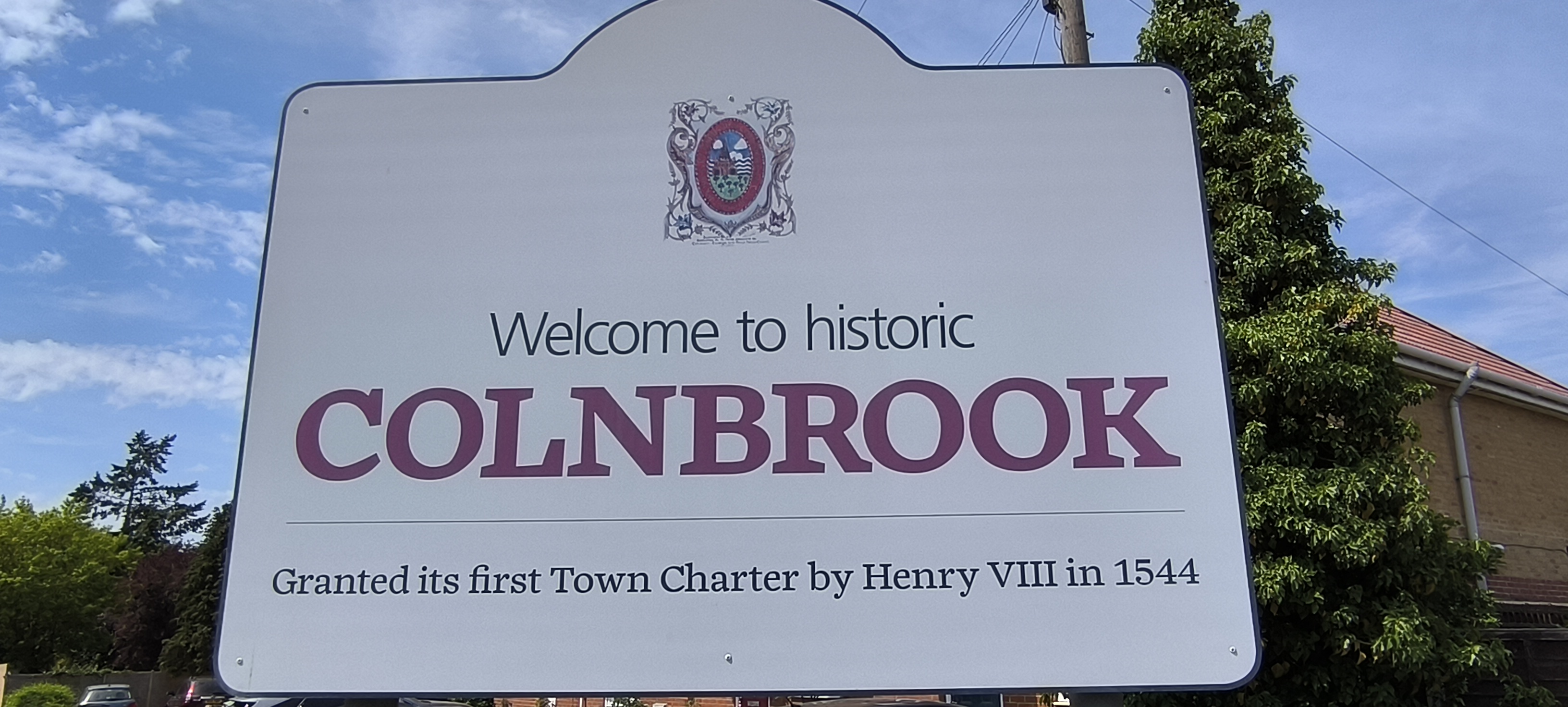
I recently wrote about the history of my village of Colnbrook, and what I discovered filled me with pride. Nine hundred years of coaching inns, royal visits, a pub founded in 1106, and my own wife cooking in a kitchen next door to a medieval palace. That history is real, and it is part of why I have lived here for more than thirty years.
But lately I have started to see something else. Not the history, but what is happening to the place now. And it has become one of the reasons I am seriously thinking about leaving.
It did not happen all at once. That is what makes it so hard to pin down. The changes crept in slowly, and one day I looked around and realised the village I remembered had become harder to recognise.
There is a route I used to walk regularly, just around the corner from my doorstep, leading to Pippins Park. I do not walk that way as often now. The park is named after the Pippins apple that once grew here in the orchards, long before the houses came. My own home stands on land that was once part of that orchard. Knowing that makes everything I see around me feel more personal than it probably should.
I remember when the kerbs were clean and the roads did not feel like car parks. The council could actually reach the kerbsides to clean them. Now, empty cans, bottles, vapes and rubbish sit along the roads as though nobody notices or nobody cares. Bins overflow. Fly tipping appears and stays. It is not dramatic, and saying it out loud makes it sound like a small thing. But when you have lived somewhere for three decades and watched the slow slide, it is not small. It is exhausting.
The change that has affected Colnbrook most, though, is not the litter. It is the homes. Many houses in Colnbrook and the parish of Poyle have been converted into HMOs — homes of multiple occupation. Where one family once lived, four or more may now be under the same roof. The pressure that puts on parking, noise, waste, and the feel of a street is something you do not understand until you live next to it. Gardens that were once kept with pride are now paved over or left to grow wild. The sense of a community looking after its own patch has thinned, and in some corners it has gone altogether.
I do not blame the people living in those houses. Most of them are just trying to get by, the same as anyone. But the landlords who pack them in, and the systems that allow it, have changed the character of this village in ways that cannot easily be undone.
And here is the thing I have only recently been able to admit to myself. I have stopped fighting it. For years I walked these streets and felt proud of where I lived. I noticed the history, the beauty, the quiet. I still see it — it has not all gone. But the balance has tipped. The pride I felt is now mixed with something heavier, and I am tired of carrying both.
That is part of why Leicester has started calling me home. When I visited Jitu last month and walked along Belgrave Road, I felt something I do not feel here any more. I felt like I belonged. The language around me was Gujarati. The temples were full. People my age had places to go and things to do. Nobody was rushing past, and nobody was dumping a mattress on the pavement.
I know Leicester is not perfect. No place is. And I know that if I moved there I would probably find things to complain about within a month. But the difference is this: Leicester feels like somewhere that is growing towards something. Colnbrook feels like somewhere that is slowly losing what it had.
I still love this village. That is why its decline hurts. You do not grieve for a place you never cared about. But love is not always enough to make you stay. Sometimes you have to accept that the place you remember is not the place you live in any more, and that the version of it you are holding on to exists mostly in your own head.
I have not made my decision yet. But every overflowing bin, every paved-over garden, every house split into four makes the question a little easier to answer.
Could I really leave Colnbrook? A year ago I would have said no. Now I am not so sure. And that, more than anything, tells me how much has changed.