Category: Life- and -Emotions

  • Could I Really Leave? — Why Leicester Is Calling Me Home

    Could I Really Leave? — Why Leicester Is Calling Me Home

    I would leave where I’m living now within a heartbeat. That is the honest answer, and it surprised me how quickly it came.

    After my recent trip to Leicester, the question stopped being hypothetical. I have visited Leicester many times over the years, but this last trip felt different. There was no wedding pulling me back, no funeral, no obligation. I went because I wanted to, and while I was there I found myself thinking not about the past, but about the future. Could I live here again?

    Leicester was my home for seven years after we arrived from Uganda in 1972. My parents lived there. My brother Jitu still lives there. I have family, old friends, and connections that go back more than fifty years. Whenever I go, I feel something I do not feel in Colnbrook. I feel like I am home.

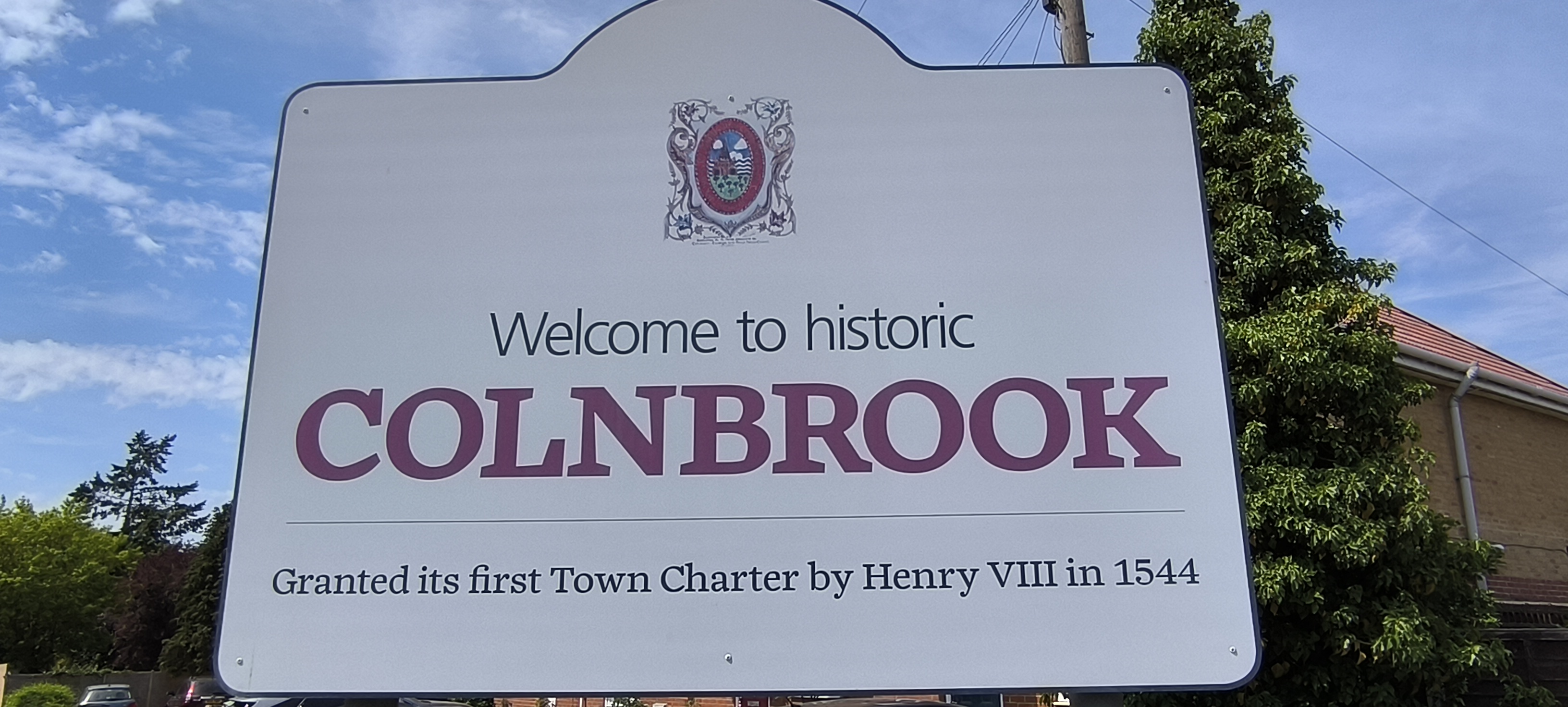
    I have lived in Colnbrook for over thirty years. It has been a good place in many ways, and I have written about its history and walked its streets more carefully than most people who live here. But something has shifted in me. After more than fifty years of working, from the age of seventeen to retirement at sixty-five, and after seven years of being alone since Harsha passed, I have reached a point where my own space matters more than anything else.

    I sit every day on the seat that used to be Harsha’s. She would sit there and paint. Now I sit there alone. Alone in my heart, alone in my head, alone in a house that sometimes feels too full of other people’s lives and not enough of my own.

    I am not looking to run away. I am looking to find something. Somewhere quieter. Somewhere I can spend a whole day without the noise and interruptions that seem to follow me here. Somewhere I can write, walk, think, and simply be. I have spent most of my life doing everything for everyone else. Now, for however many years I have left, I want to do something for me.

    I have talked to my daughter about it. The conversation is one we have had more than once, and it never quite resolves. She does not want me to go — I can hear that clearly enough, even when she does not say it directly. Instead, she suggests that perhaps she should be the one to move. But she cannot, not with her situation as it is. And so the conversation circles, lands nowhere, and we both leave it where it sits until next time. I understand her worry. A father leaving is not a small thing, no matter how old the father is or how good his reasons are.

    Why Leicester

    But the pull is real. Leicester offers things that simply do not exist where I live now. There are walking groups I could join. Temples that serve the community in ways that go beyond worship — places where older people gather, where the language spoken is Gujarati, the language I grew up with, the language I think in. There are parks with activities suited to someone my age, restaurants serving food that tastes like home, and a social life that I do not have here.

    Most of all, there is Jitu. I walked him to school in Kampala when he was small. I bought him his first bike. I was the older brother who looked out for the youngest. Now, more than fifty years later, I find myself wanting to be near him again — not because he needs me the way he once did, but because I need the closeness. Moving to Leicester would bring that full circle, back to where it all started for both of us.

    Leicester is at the top of my list. I have thought about the countryside too, somewhere truly quiet. I have even thought about going abroad. I do not have a final answer yet. But I know that the question has stopped being “would I leave?” and become “when?”

    Something happened recently that confirmed what I already felt. I will not go into the details, but it reminded me that I am in a place where things outside my control keep pulling me into situations I did not choose and do not want. I have spent too many years being dragged into other people’s difficulties. I am trying to break that pattern before it pulls me into another spiral.

    This is not a decision I will make overnight. There are practical things to work out, people to consider, and a lifetime of roots in this part of the world that do not pull up easily. But the thought is no longer just a thought. It is becoming a plan.

    Could I really leave? Yes. I could leave tomorrow if the pieces fell into place. The harder question is whether the people around me are ready for that. And whether I am brave enough to choose myself, after a lifetime of choosing everyone else.

    I think I am getting there.

  • Just Do It

    Just Do It

    Just do it. This is my motto. Now you can’t stop as there’s so much to do and so little time to do it in, so just get on with it and don’t complain or make excuses.

    That paragraph describes who I am now. After years of servitude and taking care of the necessary needs of life. Now, more than ever, it’s my time to do all the things that make me happy. Not that I wasn’t happy before. I was living for someone else. My life was on the back burner.

    What makes me happy? Being outdoors. Writing, whenever possible. I’m still learning a lot on this final phase of my life, however long it may last.

    But the journey has to be fulfilling. I keep daydreaming of things I haven’t done or achieved any goals. Mental note made to make a daydreaming list!

    If I could send my future self one sentence, it would be this: just do it.

  • My Cancer Story: Ranju

    My Cancer Story: Ranju

    She is 75 now, but to me Ranju is still impossible to forget: quiet, watchful, disciplined, and somehow always in command. She married young and left for England while the rest of us were still in Kampala, Uganda, and for years I struggled to put into words what made her so memorable. Then the memories came back. I was about 12 or 13, forever sneaking around in search of food between meals, and there she would be, standing guard with her unshakable rules: three meals a day, nothing in between. Even the beds she made were off limits until bedtime, so perfectly arranged that no one dared disturb them. At the time it was exasperating. Now it feels oddly tender, the first glimpse of the woman who would spend her life caring for everyone around her in her own steadfast way.

    She helped raise us, and in many ways she became one of the steady forces that shaped our family. Ranju has always been the quiet one, never the loudest voice in the room, but often the wisest. She has one of the biggest hearts of anyone I know. To us, she is the family’s unofficial doctor, always ready with an Ayurvedic remedy, a home cure, or a piece of practical advice. More than that, she is a woman of deep faith, and her kindness shows itself not in grand gestures, but in the small, constant acts of care that have defined her whole life.

    When I was diagnosed with cancer, Ranju stepped towards me without hesitation. I never had to explain what I needed, and I never had to ask. At the same time, my wife Harsha was in hospital with serious health problems of her own, while I was being taken from one appointment, test, and treatment to the next. It was a time when illness seemed to swallow every corner of our lives. Those were frightening, exhausting days, and there were moments when the future felt unbearably uncertain. In the middle of all that fear, just knowing Ranju was only a phone call away gave me real comfort and strength.

    I would often go to her house just to sit with her for a while, to talk, to hear a little family gossip, and, of course, to drink one of her wonderful cups of masala tea. Sometimes I stayed for lunch or dinner, and she would quietly make sure the food was right for me: less spice, more soup, more vegetables, always thinking about what my body could manage while I was going through treatment. It was never anything dramatic, just the sort of gentle, practical care that asks for no praise and yet means everything when you are unwell. She always smiled, but behind that smile I could see how deeply she worried for me. My brother-in-law, Ashwin, was much the same: always welcoming, always generous, and another steady shoulder to lean on when life felt too heavy. Ranju and Ashwin were married in Kampala in 1970. He had seen a photograph of her and travelled from England, by way of his family home in Mombasa, already certain in his heart before they had even met. Arranged marriages were, and still are, common in many Indian families, but theirs grew into a partnership of deep companionship and endurance. Ashwin passed away in 2022, leaving a silence that is still felt among us. He was a deeply knowledgeable man, especially when it came to history, and conversations with him could go on for hours, often turning into lively debates or thoughtful discussions. I miss those moments with him very much, and I know Ranju feels that loss even more deeply. They were together for fifty-two years. That is not simply a length of time, but a whole lifetime shared.

    What has always astonished me about Ranju is that, even through love, loss, and all the demands of family life, she has never stopped caring for others. However much was asked of her at home, she somehow still found room for the rest of us. Hardly a day passes without a phone call. Sometimes she rings twice, simply to ask, “Are you alright?” On the surface it is such a small question, but when it comes from Ranju it carries years of love, loyalty, and devotion. Her concern for her younger siblings has never faded. She stood beside us through Harsha’s long illness, through the many trials our family has faced, and through my own battle with cancer.

    Yet for all the comfort she has given others, Ranju has had her own share of sorrow and responsibility. She cared for a husband with heart problems, raised two wonderful daughters, and devoted herself to a son with additional needs. A life like that is built on sacrifice, patience, and countless daily acts that often go unseen. It also brings worry, tiredness, and heartache, much of which she has carried quietly.

    Now in her early seventies, Ranju seems more fragile than the sister I remember from years ago, especially as she lives with the loss of her beloved husband, Ashwin. And yet whenever I visit, I am met with the same warmth and affection. The kettle goes on, food appears on the table, and before long she is asking how everyone else is doing. That is who she is. Even in grief, even with her own worries, she turns naturally towards others. She is not someone who speaks easily about her troubles. More often, she carries them quietly and keeps going, still loving, still giving, still putting others first.

    Ranju holds a very special place in my heart, and in the hearts of all my siblings, not just because she is our elder sister, but because she has loved us so steadily throughout our lives.

    The best way I can describe Ranju is this: she asks for very little, expects even less, and never stops giving to the people she loves.

    I treasure our daily phone calls. Sometimes we speak for only a few minutes, sometimes longer, but I always come away feeling comforted. During my illness, that meant more to me than I can say. Her love did not take away what I was going through, but it helped me through it.

    Ranju has always been there for all of us. She asks for very little, gives so much, and never stops thinking about her family. I feel very lucky to have a sister like her. Her love and constant support have been among the great strengths in my life, and I will always be grateful for them.

  • Where do you see yourself in 10 years?

    Where do you see yourself in 10 years?

    A comment by my daughter made me think.

    During many discussions about life in general, subjects crop up that many people do not want to talk about. One that is common is Death!

    I turned 70 this year.Hurrah! Taking into account all the things that life has thrown at me, making it upto here has been a journey.

    So will I make it to 80? That started a discussion in the kitchen, mug of tea in hand and thoughts of what the future could bring. Well, a war started and that alone has put question marks on where we’ll all be in 10 years.That question alone is a I know where I want to be, what I need to finish doing and the big question of health.

    I see challenges ahead, not insurmountable but never the less, still there. My daughter saw me with a backpack, two trekking sticks , wearing a windbreaker and my favourite woolly hat atop a mountain, no less!

    Did I see that? The picture yes but in reality I was holding a mug of tea.Sitting atop a breakfast chair in the kitchen Maybe, I’ll get the tealeaves read. That will surely predict my future!!